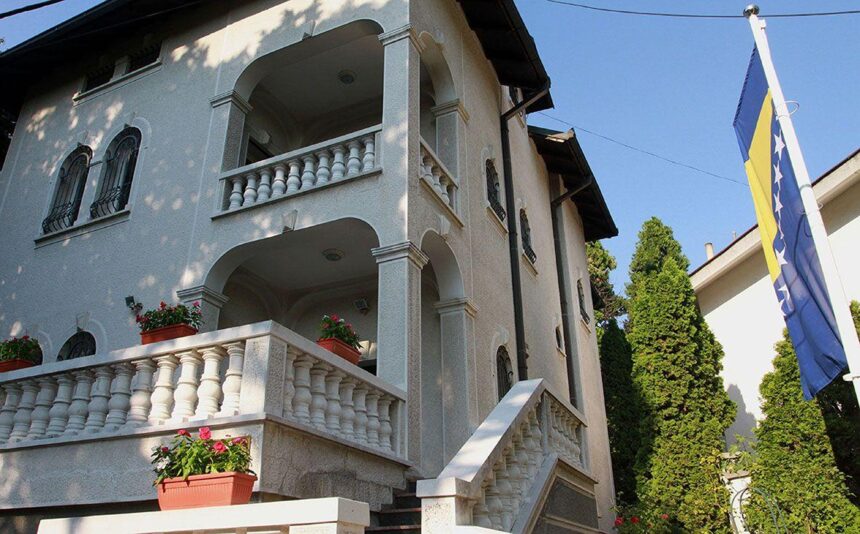
Bosnia and Herzegovina is taking a major diplomatic step against Serbia following the state-backed glorification of convicted war criminal Ratko Mladić.
Bosnia’s Foreign Minister Elmedin Konaković announced that nearly all diplomatic staff from Bosnia’s embassy in Belgrade will be withdrawn, leaving only the ambassador and consul.
Konaković said the move is intended to reduce relations with Serbia to “the lowest possible level” following the way Serbian authorities handled Mladić’s death and funeral.
“If I had the authority, I would cut diplomatic relations with Serbia today,” Konaković said, adding that he would instead work to reduce bilateral relations as much as legally possible.
He explained that he does not have the authority to recall the ambassador or consul because those decisions fall under Bosnia’s tripartite Presidency. Other diplomatic personnel, however, will leave Serbia, while consular services are expected to be handled through Bosnia’s embassies in Croatia and Montenegro.
The announcement comes after Mladić was buried in Belgrade with military honors, in a ceremony attended by thousands of people and Serbian officials.
Mladić was convicted by the International Criminal Tribunal for the former Yugoslavia and sentenced to life imprisonment for genocide, war crimes and crimes against humanity.
For Bosnia, the decision to publicly honor him is not simply a matter of how Serbia chooses to commemorate a dead man.
It is a direct reminder of how far Serbia still has to go in confronting the legacy of the 1990s wars.
While families of Srebrenica victims continue to live with the consequences of the genocide, Mladić was given a ceremony surrounded by military symbolism, political figures and large crowds of supporters.
Konaković said Bosnia would take further diplomatic steps and inform international partners about developments following Mladić’s death.
Serbia’s Foreign Minister Marko Đurić, meanwhile, accused Konaković of “hypocrisy” over the decision to downgrade relations.
But the question remains:
What is more damaging to regional relations — condemning the glorification of a convicted war criminal, or turning that convicted war criminal into a symbol of national pride?
Bosnia has now answered with diplomacy.
The next question is whether Belgrade—and Brussels—will listen.