Serbian lawyer and political critic Čedomir Stojković has sharply criticized Serbia’s current political climate, arguing that the country continues to operate under what he describes as a “Milošević-Šešelj mythology” as President Aleksandar Vučić’s Serbian Progressive Party (SNS) moves closer to the Serbian Radical Party (SRS) of Vojislav Šešelj.
Stojković said that as long as what he calls the “Milošević-Šešelj ideology” continues to shape public perceptions and political thinking, political decisions in Serbia will continue to reflect the same model.
“As long as people believe in the Milošević-Šešelj mythology and ideology and in such a distorted reality, political decisions will be Milošević-Šešelj decisions,” Stojković wrote.
“And with them, the consequences. There are no exceptions here. It does not depend on whether someone is a professor, a student or a miner,” he added.
SNS and Šešelj’s radicals move closer
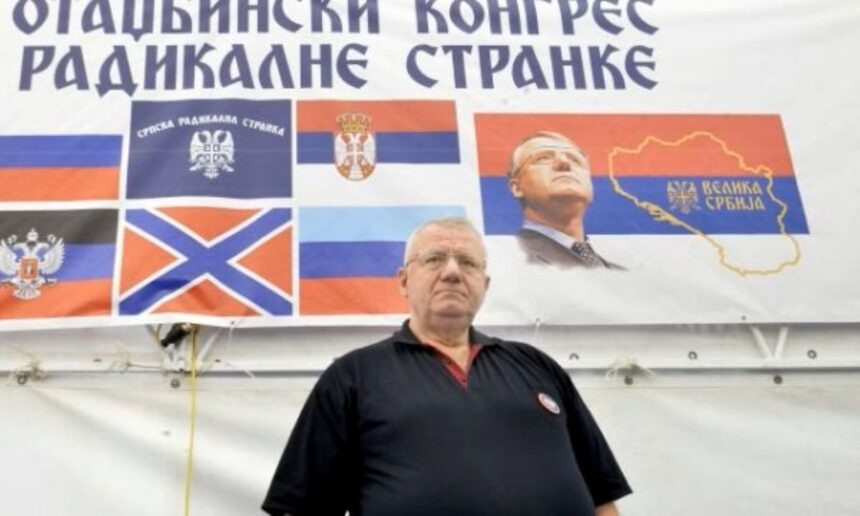
Stojković’s remarks come as Serbia prepares for early parliamentary elections, with Šešelj’s SRS joining the same electoral bloc as Vučić’s SNS. The radicals have also expressed support for Vučić as a candidate for prime minister.
The renewed cooperation has brought renewed attention to Vučić’s own political history.
Vučić began his political career in the SRS, joining the party in 1993. He served as an MP and later became the party’s secretary-general.
In 2008, following a split within the Radical Party, Vučić left the SRS and joined the newly established SNS, which was formed by former radicals led by Tomislav Nikolić and Vučić.
The latest cooperation between the SNS and Šešelj’s party has also extended to the local level. During local elections this year in Aranđelovac, Šešelj campaigned for an SNS-led list, while SRS members participated in a joint electoral list associated with Vučić.
Critics see a return to the politics of the 1990s
The renewed alignment has drawn criticism from independent Serbian media and political commentators, who argue that Vučić is increasingly returning to elements of the political model associated with the Radical Party and his former mentor, Šešelj.
Critics have focused in particular on the use of nationalism and political narratives rooted in the 1990s, drawing comparisons between current rhetoric and the period when Vučić was one of the leading figures of the SRS.
The political rapprochement has also raised questions about how far Vučić’s transformation from a prominent Radical Party politician into Serbia’s dominant pro-European-facing political leader has changed the ideological foundations of his politics.
Šešelj’s wartime legacy
Šešelj was one of the most prominent figures of Serbian nationalism during the wars accompanying the breakup of Yugoslavia.
In 2018, the UN tribunal’s successor mechanism sentenced him to 10 years in prison for persecution, deportation and forcible transfer of Croats from the village of Hrtkovci in Vojvodina in 1992. The sentence was deemed served because of the time he had already spent in detention.
Against this backdrop, Stojković’s reference to a “Milošević-Šešelj mythology” comes as Vučić and his party enter an election cycle alongside the radicals, more than 15 years after Vučić left the party where he began his political career.
The alliance has revived debate over whether Serbia’s current political leadership has moved decisively away from the nationalist politics of the 1990s — or whether elements of that political legacy remain deeply embedded in the country’s contemporary political landscape.