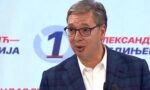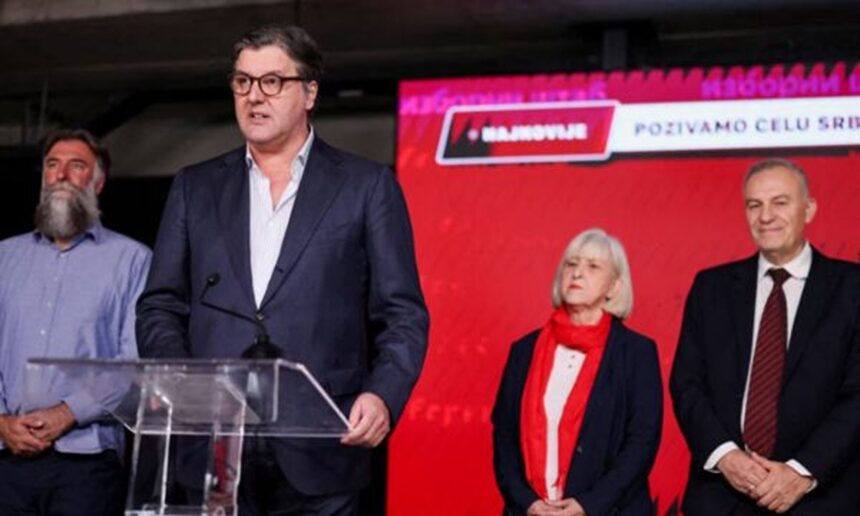
Serbian President Aleksandar Vučić has conceded defeat in the October 25 parliamentary elections, acknowledging that the student-backed Student List is expected to secure a majority in the new parliament.
According to preliminary estimates by CRTA, the Student List won 51.47 percent of the vote, compared with 40.42 percent for the “Aleksandar Vučić – United Serbia” coalition. These figures are preliminary and do not constitute the final official results.
The Student List emerged from the student-led anti-corruption protests that erupted after the collapse of a concrete canopy at the railway station in Novi Sad in November 2024, killing 16 people. The movement has no single leader. Instead, students organise through plenums, where decisions are made collectively. For the elections, they backed a list of candidates from a range of professional and social backgrounds.
But what does the Student List’s electoral breakthrough mean for Kosovo?
During the campaign, its candidates called for a review of all agreements reached in the EU-facilitated dialogue on the normalisation of relations between Kosovo and Serbia. They also advocated bringing Kosovo’s status back before the United Nations and insisted that decisions concerning Kosovo should be made only after consultations with Kosovo Serbs.
Whether the movement will maintain these positions now that it has won the election remains to be seen.
An analysis of the movement’s public statements by Radio Free Europe/Radio Liberty (RFE/RL) ahead of Sunday’s vote identified one central position shared by its representatives: “Kosovo is an integral part of Serbia, as stated in the country’s Constitution.”
Throughout the campaign, representatives of the Student List symbolically carried copies of the Serbian Constitution, signalling their commitment to defending it and acting in accordance with its provisions.
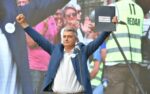
Supporters of the “Student List – Students Win” electoral list celebrate after the first results of Serbia’s parliamentary elections in central Belgrade on October 25, 2026. REUTERS/Uros Arsić.
Belgrade does not recognise Kosovo as an independent state. Nevertheless, negotiations aimed at normalising relations between the two sides have been underway under EU mediation since 2011. Dozens of agreements have been reached during the process, which many political analysts view as steps towards de facto recognition of Kosovo’s statehood.
Among the most significant is the Agreement on the Path to Normalisation of Relations between Kosovo and Serbia, commonly known as the Basic Agreement. Kosovo Prime Minister Albin Kurti and Serbian President Aleksandar Vučić accepted it at the political level in Brussels on February 27, 2023, following the Franco-German proposal. The agreement includes commitments to respect territorial integrity and for Serbia not to oppose Kosovo’s membership in international organisations. An implementation annex was agreed in Ohrid on March 18, 2023.
Kosovo, for its part, committed to providing the Serb community with a level of self-management through the establishment of the Association of Serb-Majority Municipalities.
What happens next?
Kosovo Prime Minister Albin Kurti has conditioned the resumption of high-level political dialogue on Serbia extraditing Milan Radoičić, who claimed responsibility for the terrorist attack in Banjska in September 2023.
The Student List, which could shape Serbia’s state policy over the next four years, has yet to articulate a clear position on Radoičić or the question of accountability for the attack.
Much of the criticism surrounding Belgrade’s influence in Kosovo has focused on the Serbian List, the main political party representing Kosovo Serbs. The party was established with the backing of Serbia’s ruling Serbian Progressive Party and Vučić. Radoičić served as its deputy leader until the Banjska attack.
A change of government in Belgrade could alter how Serbia exerts political influence over Kosovo Serbs, particularly through the Serbian List. But that influence extends well beyond party politics. For thousands of Kosovo Serbs, institutions funded by Serbia provide employment, salaries, pensions and social assistance. Education and healthcare institutions also continue to operate within Serbia’s system, employing thousands of members of the Serb community.
The Student List included four representatives from the University of North Mitrovica, which operates within Serbia’s education system. One of them, Jugoslav Gašić, an assistant professor at the Faculty of Medicine, discussed the potential integration of Serbian-run educational and healthcare institutions in Kosovo with the Belgrade-based newspaper Danas.
“If [integration] means simply registering with the so-called Kosovo system, that is acceptable to me. But integration as ‘Kosovarisation’ is absolutely unacceptable,” Gašić said.
Kosovo raised the issue in September last year, arguing that the parallel system was unsustainable. International representatives have maintained that any integration process must involve consultations with the Serb community. They have also criticised Kosovo’s previous closures of Serbian-run institutions where alternative arrangements for delivering services to affected citizens were not in place.
Marko Savković believes that Vučić’s departure from power would put the political infrastructure built under his rule under considerable strain.
“That infrastructure would face crises that would be extremely difficult to overcome: a funding crisis, a leadership crisis and an identity crisis,” Savković, an associate of the Belgrade Centre for International and Security Affairs, told RFE/RL’s Expose programme in early October.
This would not necessarily mean an end to Serbia’s financial support for Kosovo Serbs. The question is how that support would be organised under a new government and whether it would remain closely tied to political control from Belgrade.
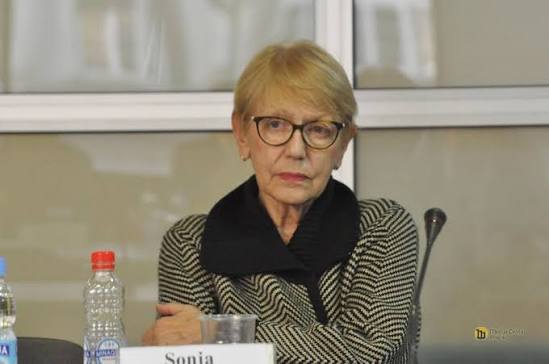
Sonja Biserko of the Helsinki Committee for Human Rights believes a change of government could create an opportunity for a more pragmatic approach.
“For Kosovo Serbs, it would be important for a new government in Serbia to take a realistic approach towards them, help strengthen their position in Kosovo and encourage them to engage in dialogue with Pristina. That would be the best solution for them,” Biserko told RFE/RL’s Expose programme.
During a debate on Serbia’s public broadcaster, Gašić also said that, if the Student List came to power, it would insist that all agreements signed with Kosovo undergo parliamentary procedures and review by Serbia’s Constitutional Court, potentially opening the door to their reconsideration.
It remains unclear whether this would amount to a legal challenge to Serbia’s existing commitments, a political reassessment of the agreements, or a change in how Belgrade implements them.
Political analysts Ognjen Gogić and Aleksandar Šljuka have previously told RFE/RL that a future Serbian government would find it difficult to withdraw from the dialogue, as doing so could jeopardise the country’s relations with the European Union.
The Kosovo Memorandum
Earlier this year, the Student List published a Kosovo Memorandum at one of its rallies, describing Kosovo as an “inalienable and integral part of the Republic of Serbia”.
The document drew criticism from some voices in Serbia, who argued that adopting nationalist positions would not be enough to defeat the Serbian Progressive Party. The memorandum contains four points outlining the movement’s approach to Kosovo.
One states that the Kosovo issue “cannot be resolved in isolation, but only within the complex developments of the international community”. It also calls on Serbian authorities to “actively and constructively cooperate with all relevant international organisations” in seeking a lasting solution “within the framework of their Constitution”.
At the end of September, the students released another campaign video titled “The Betrayal of Kosovo”.
Their criticism of Vučić does not stem from a belief that Serbia should recognise Kosovo’s independence. Rather, they accuse him of allowing developments they consider detrimental to Serbia’s position, including changes involving Serbian licence plates and the dinar in Kosovo, as well as the closure of institutions operating under Serbia’s system by Kosovo authorities.
Opposition to Kosovo’s independence, however, long predates Vučić. Successive Serbian governments since the fall of Slobodan Milošević have maintained that Kosovo is part of Serbia, a position also shared by a majority of Serbian citizens. A 2023 survey by the Institute for European Affairs found that more than half of respondents opposed Kosovo’s independence.
Savković argues that this opposition is unlikely to disappear with a change of leadership in Belgrade.
The political space in Serbia for a fundamentally different approach to Kosovo’s status remains extremely limited, he told RFE/RL.
“Opposition to Kosovo’s statehood as a concept is certainly state policy, and some degree of continuity can be expected regardless of who comes to power in Serbia. Political options that accept the de facto reality because Kosovo is de facto a state are few and remain on the margins of the political spectrum,” Savković said in an interview with RFE/RL’s Expose programme.
Biserko likewise does not expect a rapid shift in Serbia’s position on Kosovo, even if a new government takes power.
“In different crisis situations, everyone will try to use Kosovo to mobilise emotions and rally people around themselves. I believe there will be no fundamental change regarding Kosovo’s status. That is out of the question,” she told Expose.
The Student List’s electoral victory therefore raises two separate questions: whether it will change how Serbia is governed domestically, and whether it will challenge the longstanding national consensus against recognising Kosovo’s independence. Its campaign statements so far suggest that political change in Belgrade does not necessarily mean a change in Serbia’s position on Kosovo.