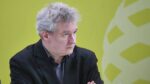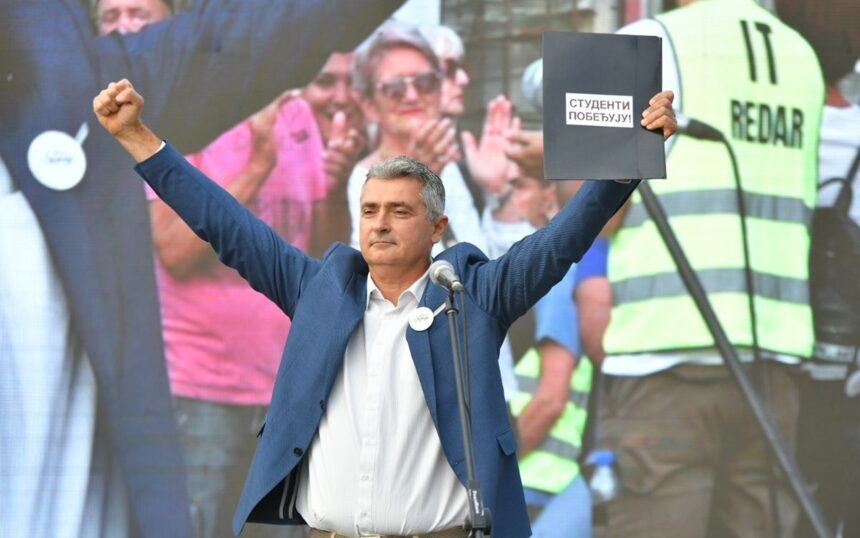
Ilija Srdanović, a cardiologist and professor at the Faculty of Medicine in Novi Sad, is the figure who led Serbia’s Student List, challenging Aleksandar Vučić’s long-standing political dominance.
Who is Ilija Srdanović?
His political involvement took a new direction after he publicly supported student protests against corruption. In September 2026, he was presented as the leading candidate of the independent electoral list backed by the student movement, which is calling for changes to the functioning of institutions and the country’s political leadership.
The movement’s platform emphasises the fight against corruption, the rule of law, combating organised crime and media freedom. However, Srdanović’s positions on foreign policy, including Kosovo and European integration, deserve particular attention.
During a recent meeting with students in Novi Sad, where he was introduced as a candidate, Srdanović addressed the tragedy at the city’s railway station, where the collapse of a concrete canopy killed 16 people in November 2024. He stressed that citizens continue to demand answers and accountability for what happened.
According to Srdanović, much of the hope for change lies with the younger generation and its commitment to building a better future for Serbia. He sees young people as a force capable of transforming the country and improving its institutions.
Srdanović was born in 1970 in Novi Sad, where he built his academic and professional career. After completing his medical studies and specialist training, he earned his doctorate in 2012. Since 2018, he has been part of the academic staff at the Faculty of Medicine in Novi Sad, teaching in the field of emergency medicine.
His involvement in the student movement came amid anti-corruption protests, which he supported from their early stages. He addressed rallies organised by the movement, gradually strengthening his public profile.
His position on Kosovo: in line with Serbia’s Constitution
Despite presenting himself as a representative of a movement seeking political change in Serbia, Srdanović has not articulated a new position on Kosovo’s status. On the contrary, in interviews with BBC Serbian and the Insajder television network, he stated that the Student List bases its position on Kosovo on the Constitution of Serbia.
“Kosovo and Metohija are an integral part of our country,” Srdanović said, referring to the Serbian Constitution. He also stated that the list would seek the best possible solutions for Serbs in Kosovo, pledging not to abandon them.
When asked whether the Student List would implement or reject the Ohrid and Washington agreements, Srdanović did not provide a direct answer. Instead, he reiterated that, under Serbia’s Constitution, Kosovo is part of Serbia.
Thus, while Srdanović and the student movement are calling for far-reaching changes to Serbia’s domestic politics, his public statements indicate continuity with Serbia’s official position on Kosovo. So far, he has not publicly expressed a position recognising Kosovo’s independence.
With his medical background and prominent role in the student movement, Srdanović has become one of the leading figures challenging Vučić’s government. However, the victory of a movement promising change in Serbia does not automatically mean a change in its policy towards Kosovo.