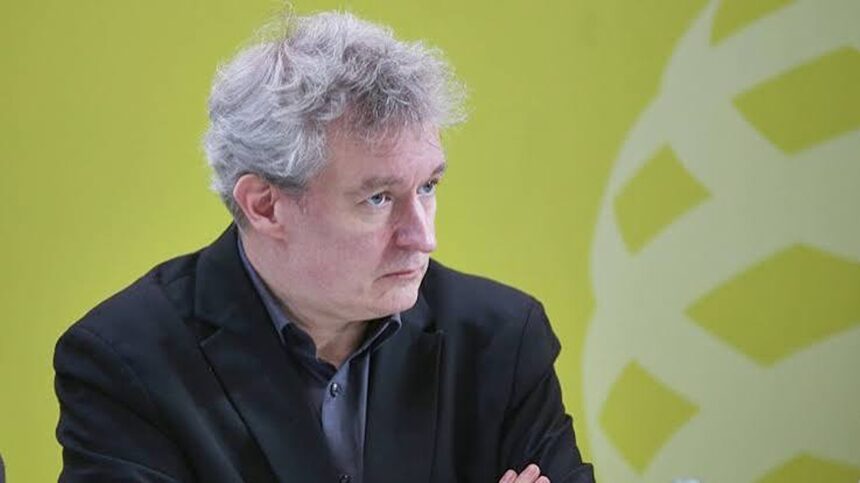
German journalist Michael Martens has highlighted the reaction of Maximilian Krah, a member of Germany’s far-right Alternative for Germany (AfD), to the electoral defeat of Serbian President Aleksandar Vučić’s political camp, exposing the wider political significance some European right-wing figures attach to the result.
“Not a good day. After Hungary, we have lost Serbia as well,” Krah wrote on X, referring to the electoral setbacks suffered by political leaders aligned with his ideological camp. Martens drew attention to the statement, describing the AfD as a far-right, pro-Putin party.
Krah’s use of the word “we” is particularly striking. His reaction frames the result not merely as a domestic defeat for Vučić, but as a setback for a broader political network that extends beyond Serbia’s borders. It also raises questions about how some European far-right figures view their relationships with leaders such as Vučić.
The reaction followed Serbia’s parliamentary elections on October 25, in which the student-led Student List emerged as the winner, according to Vučić’s own acknowledgment. Initial estimates put the Student List at 135–140 seats in the 250-member parliament, compared with around 105 for Vučić’s political camp. Final official results were still pending at the time of the initial reports.
Krah also argued that the European right needs to reorganise, suggesting that its current political approach is failing to convince voters. By linking Serbia’s result to the earlier defeat of Viktor Orbán in Hungary, he presented the two outcomes as part of a broader political trend rather than isolated national events.
The Serbian election followed nearly two years of student-led protests triggered by the collapse of a railway station canopy in Novi Sad in November 2024, which killed 16 people. The protests developed into a nationwide movement demanding accountability and challenging allegations of corruption and abuses of power.
For Vučić, the result represents a significant challenge to a political system he has dominated for years. For his international allies, Krah’s reaction suggests that the consequences may extend beyond Serbia’s domestic politics.
His statement leaves a broader question hanging over Europe’s right-wing political movements: are these defeats isolated setbacks, or signs that voters are increasingly willing to challenge leaders who have long appeared politically unassailable?
This is the original statement on X: