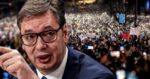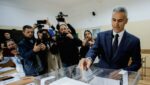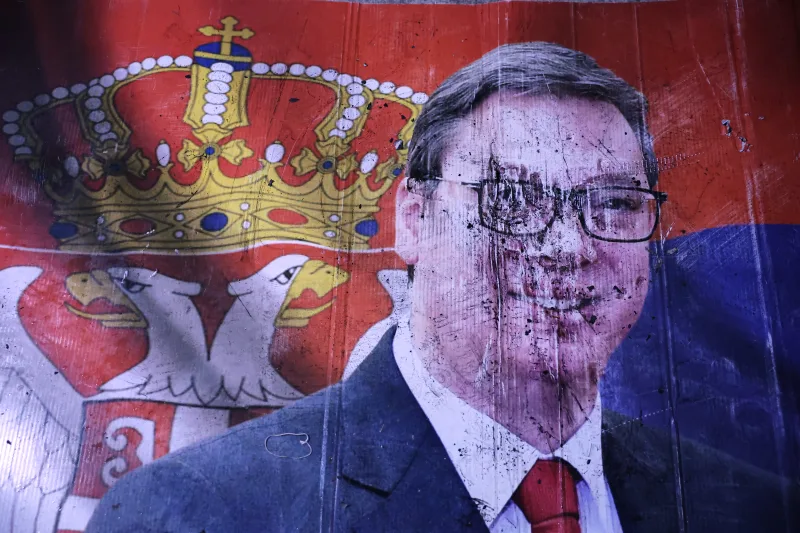
Serbia’s long-serving leader Aleksandar Vučić has conceded defeat in the parliamentary election, ending 14 years of political dominance by his Serbian Progressive Party (SNS) and handing victory to a grassroots, student-led opposition movement.
The result marks a major shift in Serbian politics after nearly two years of student protests against Vučić’s government. The movement gained broad public support by focusing on allegations of corruption, cronyism and links between political power and organized crime.
At 56, Vučić had spent decades building his political influence and repeatedly outmaneuvering his opponents. Ahead of Sunday’s election, he resigned from the presidency to pursue the position of prime minister, launching an aggressive campaign backed by extensive coverage in pro-government media, attacks on opponents and promises of higher pensions, new roads and cheaper medicines.
However, these efforts failed to prevent the student-led movement from defeating his party.
Protests sparked by deadly railway station collapse
The student protests began in 2024 following the collapse of a canopy at a renovated railway station in northern Serbia, which killed 16 people. The tragedy prompted accusations that corruption and negligence had contributed to poor construction work.
The students turned the disaster into a broader campaign demanding accountability, transparency and changes to the political system. Their message resonated with voters dissatisfied with the government’s record.
After conceding defeat, Vučić blamed foreign interference, alleging that European countries and elements of the US establishment had supported what he described as a revolution against his government.
From ultranationalism to balancing global powers
Vučić’s political career spans more than three decades. During the wars of the 1990s, he was associated with the Serbian Radical Party and supported ultranationalist policies, including the idea of a “Greater Serbia” encompassing territories in Croatia and Bosnia and Herzegovina.
As Serbia’s information minister in the late 1990s, he oversaw a media environment in which outlets critical of the government of Slobodan Milošević faced heavy fines or closure.
He later repositioned himself as a pro-European politician, and his Serbian Progressive Party came to power in 2012. During his years in office, Vučić sought to maintain relations with both the European Union and Russia while also expressing admiration for US President Donald Trump.
In the run-up to the election, however, he renewed his emphasis on nationalist positions and highlighted his relationship with Russian President Vladimir Putin.
Vučić also drew criticism from the European Union after Belgrade hosted a state funeral for Ratko Mladić, the former Bosnian Serb military commander convicted of genocide and other crimes by an international tribunal.
Russia reacts to Vučić’s defeat
The Kremlin said on Monday that it hoped Serbia’s next government would maintain friendly relations with Moscow.
Russian presidential spokesman Dmitry Peskov praised Vučić’s contribution to bilateral relations and said Russia intended to continue developing ties with Belgrade. During Vučić’s tenure, Serbia continued pursuing EU membership while refusing to join the bloc’s sanctions against Russia over its war in Ukraine.
Reactions in Russia were not unanimous. Konstantin Kosachev, deputy speaker of Russia’s Federation Council, suggested the election result could reduce the number of sovereign countries in Europe.
Meanwhile, Russian businessman Konstantin Malofeyev welcomed Vučić’s defeat, accusing him of political hypocrisy for attempting to balance relations between Russia and the West.
Fourteen years at the centre of power
Vučić served as deputy prime minister, prime minister and president during the period in which his party dominated Serbian politics. Although the presidency is largely ceremonial under Serbia’s constitutional system, he transformed the office into the central hub of political authority.
His government faced persistent criticism over media freedom, judicial independence and the use of state resources during election campaigns. Opposition groups and observers also raised concerns about alleged voting irregularities, intimidation and unequal access to media.
Dejan Pavlović, a professor at the University of Belgrade’s Faculty of Political Sciences, described Vučić’s governing approach as one built on rewards for loyalists and pressure on opponents. He argued that the ruling party expanded its influence across the media, judiciary and state institutions.
Vučić and his allies have rejected accusations of wrongdoing.
During the student protests, the authorities fenced off a central park near the president’s office in Belgrade and established a camp occupied by government supporters. Investigative journalists reported that some people in the camp had criminal backgrounds and alleged links between Vučić and criminal networks; Vučić has denied such allegations.
Vučić vows to continue from opposition
Despite acknowledging the defeat, Vučić said his political movement remained united and would continue its activities from opposition.
“Our structure is very firm, we are very united and strong, and we are used to being in opposition,” he said in a speech on Sunday evening.
Former Serbian President Boris Tadić argued that Vučić might not have conceded had the student movement’s victory been less decisive.
The election has opened a new chapter in Serbian politics, but questions remain over how the student-led movement will govern, whether it can maintain its internal unity and how the transition will affect Serbia’s domestic institutions and international relationships.