The agreement to ease rules on food imports and exports is expected to enter into force in the first quarter of 2028.
The European Union and the United Kingdom have finalised an agreement to remove Brexit-related checks on food and animal product imports and exports, covering everything from sausages and cheese to leather goods and flowers, The Guardian reports.
A broader package of smaller agreements, expected to be finalised at an EU-UK summit on November 20, would also require Britain to contribute to the EU budget again as part of the price for regaining access to the bloc’s common electricity market.
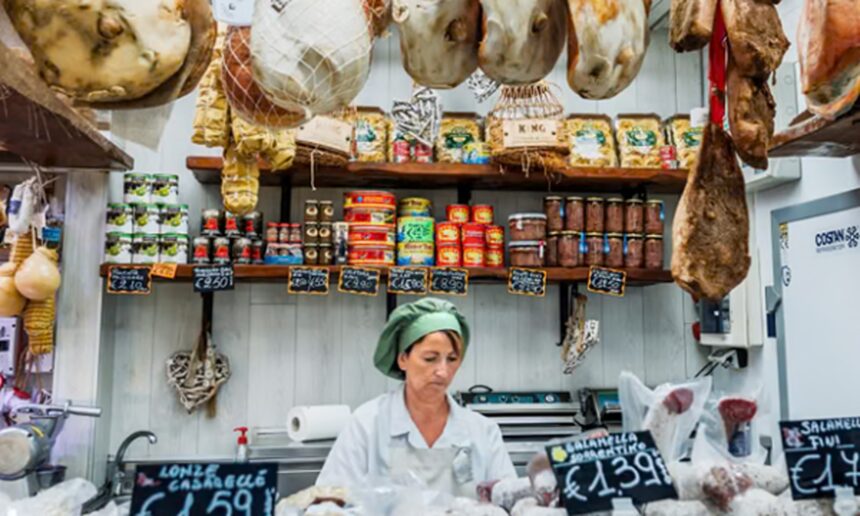
The deal would be a major benefit for British food exporters. It would also allow smaller British retailers, such as specialist food shops, to resume purchasing smaller quantities of cheese and wine, something that had become financially unviable because of the cost of Brexit checks introduced in 2022.
However, sources say the Sanitary and Phytosanitary (SPS) agreement, which was largely agreed in May, will not come into force until the first quarter of 2028. This delay follows a six-month postponement of the second EU-UK summit due to a change in the British prime minister. The summit is now expected to take place on November 20.
Last month, the National Farmers’ Union said British food exports to the EU had fallen by a third since Brexit, with eggs, poultry and potato products among the hardest-hit sectors.
Sources said a 200-page text covering post-Brexit food exports had been “finalised and there will be no further negotiations”.
A draft joint statement, expected to be published by British Prime Minister Andy Burnham and EU leaders on November 20, will be discussed by EU ambassadors at a meeting in Brussels on Wednesday.
It states that the SPS agreement would allow “the vast majority of movements of animals, animal products, plants and plant products between Great Britain and the Crown Dependencies, and the EU, to take place without the certificates or checks currently required”.
It also states that British goods would be exempt from the Carbon Border Adjustment Mechanism (CBAM), the bloc’s carbon pollution levy, because Britain and the EU have already aligned their emissions standards.
Rejoining the EU’s common electricity market is intended to help stabilise energy supplies while allowing British energy companies to sell electricity into continental Europe’s power grids once again.
The draft joint statement says: “We agree that the United Kingdom’s participation in parts of the EU’s internal market requires an appropriate level of financial contribution towards reducing economic and social disparities between EU regions, reflecting the extent of the United Kingdom’s participation in the EU internal market.”
The agreement has divided opinion among unionists in Northern Ireland. Gavin Robinson, leader of the Democratic Unionist Party (DUP), said it did not go far enough and reflected what he described as the government’s “lack of ambition”.
The DUP, which is facing internal turmoil following MP Carla Lockhart’s decision to leave the party on Monday, supported Brexit but opposed the part of the Withdrawal Agreement relating to the Windsor Framework, which introduced SPS checks on goods shipped from Great Britain to Northern Ireland.
Steve Aiken, the Windsor Framework spokesperson for the rival Ulster Unionist Party, welcomed the agreement cautiously.
“If the agreement goes ahead, checks on most agricultural products coming from other parts of our country will be significantly reduced, but not eliminated entirely,” he said.
The SPS agreement will be presented to EU ambassadors at Wednesday’s meeting, where they will discuss the first draft of the joint statement due to be published by Andy Burnham and EU leaders on November 20.
The so-called “zero draft” of the joint statement also includes provisions for a proposed youth experience scheme, although the issue remains under negotiation. Ambassadors are also expected to discuss a last-minute British proposal concerning tuition fees for young Europeans, aimed at breaking the deadlock in the negotiations.
Two weeks ago, the European Commission was so concerned that the UK would refuse to abandon its firm position that EU students should pay the full international student tuition rate that ambassadors discussed “disaggregating” the issue and reaching an agreement to negotiate it separately for another six months.
The SPS agreement was largely agreed in May and published by the government to give food producers time to prepare for the changes. At the time, the Department for Environment, Food and Rural Affairs (Defra) said it expected the agreement to take effect in May next year.
Defra has now informed industry leaders that implementation may be delayed until 2028, followed by a further six-month transition period for a small number of key products, such as grains grown this year using fungicides that have not yet been approved in the EU.
The delay is being attributed to the UK’s need to “dynamically align” its domestic food standards legislation with EU rules. Although Britain has generally continued to follow EU regulations, it has made changes in certain areas, including the use of fungicides to help crops grow in Britain’s wet weather conditions.
The legislation is expected to reignite debate over whether the UK is becoming a “rule-taker” rather than a “rule-maker”, one of the central issues surrounding Brexit.
Under the proposed framework, retailers in Northern Ireland will no longer be required to label products with the words “Not for EU”, a practice previously criticised by major supermarket chains such as Marks & Spencer.
Negotiations between British and EU officials began in London earlier this year, with the aim of removing much of the Brexit-related paperwork for both sides. A transport industry executive told a parliamentary trade committee that the Brexit paperwork had been “an absolute nightmare”, citing a case in which a lorry was held up in Calais for as long as 27 days simply because it lacked the correct certificates for a shipment of frozen beef.