The European Commission’s 2026 report on Serbia identifies setbacks in media freedom, freedom of expression, public administration, education and culture, while warning that corruption remains a serious challenge and the risk of state capture continues.
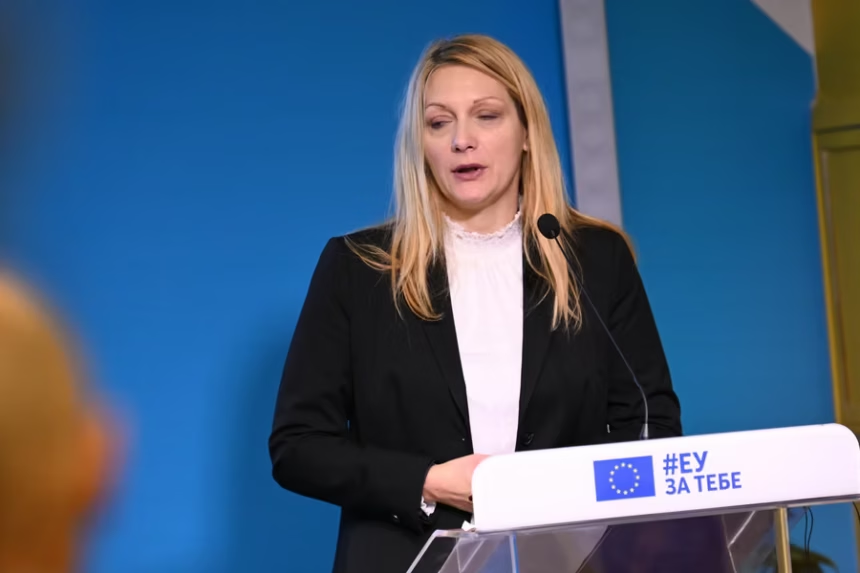
Presenting the report in Belgrade, EU Ambassador to Serbia Andreas von Beckerath said the rule of law, democracy, media freedom and the fight against corruption were areas where the expectations of the European Union and Serbian citizens fully coincide.
Von Beckerath said Serbia had a high level of alignment with EU legislation and was well prepared in areas related to the single market and competitiveness. The European Commission also reiterated that Serbia had met the technical benchmarks for opening negotiations in the judiciary-related area.
However, he stressed that no progress had been made in Serbia’s EU accession negotiations during the reporting period, which was marked by growing social polarization and declining trust between the authorities and civil society.
“Corruption remains a serious challenge, the risk of state capture is still present, and setbacks have been recorded in several key areas, particularly media freedom and freedom of expression, as well as public administration,” Von Beckerath said.
He added that the report also identified setbacks in education and culture, while noting Serbia’s limited alignment with the EU’s common foreign and security policy.
EU report highlights pressure on civil society, students and journalists
A substantial part of the report addresses the situation of civil society in Serbia, including attacks on students, activists and journalists and what the European Commission describes as an inadequate institutional response.
Von Beckerath said the document also highlighted increased pressure, attacks and intimidation targeting civil society organizations, alongside smear campaigns against their representatives and human rights defenders involving tabloids and senior government officials.
The report also points to attempts by authorities to portray protests as an alleged “color revolution,” without evidence to support such claims. It further raises concerns over the lack of follow-up in cases involving intimidation and alleged use of spyware.
Von Beckerath also highlighted the use of strategic lawsuits against public participation, known as SLAPPs, saying they obstruct the work of civil society organizations and weaken the democratic environment.
He said the European Union was prepared to work closely with Serbia’s future government and support reforms, but insisted that progress in fundamental areas must be treated as a priority.
“The rule of law is the foundation on which all other reforms are built,” he said.
Von Beckerath added that civil society and the Serbian Parliament would have an important role during the transition to a new government, particularly because of their expertise, institutional experience and public trust.
Only eight of 130 recommendations fully implemented
Bojana Selaković, coordinator of the National Convention on the European Union (NCEU), said the changes taking place in Serbia over the past two years had been the result of a longer process, just as the system challenged by citizens had not emerged overnight.
She said NCEU working groups had assessed 130 recommendations issued the previous year. Only eight had been fully implemented, while 61 had been partially implemented and approximately the same number had not been implemented at all.
Selaković said the findings were consistent with trends identified in previous years, arguing that Serbian institutions involved in the EU integration process had often been unwilling to accept recommendations from civil society.
She also described the pressure experienced by civil society organizations, recalling events witnessed by the EU ambassador during his time in Serbia, including students traveling by foot and bicycle to Strasbourg and Brussels, police entering university premises, police responses to protests, stalled accession negotiations and frozen funding under the EU Growth Plan.
Selaković said the National Convention would maintain the same role under the future government as it had under the previous administration: neither acting as a formal opposition force nor as a political ally, but independently monitoring the EU integration process.
She added that the incoming institutions should be given an initial degree of trust, while emphasizing that the Convention would continue to assess developments objectively.
EU signals willingness to support reforms
Von Beckerath said Serbia had made progress in aligning legislation and technical standards in several policy areas, but that the broader political environment had hindered progress toward EU membership.
He thanked the Serbian Parliament, the European Movement and civil society organizations for their contributions to the accession process, noting that civil society groups had maintained their positions despite prolonged media attacks and criticism from senior state officials.
“The recent parliamentary elections opened a new chapter in Serbia’s political life and created an opportunity for renewed political engagement and reforms,” he said.
The EU ambassador reiterated that Brussels was ready to cooperate with Serbia’s future government, stressing that reforms in the rule of law, democratic institutions, media freedom and anti-corruption efforts would be essential to advancing the country’s European integration.