Serbia’s Security Intelligence Agency (BIA) has carried out secret surveillance measures targeting students, representatives of the University of Belgrade, opposition politicians, trade unionists and activists, according to an investigation published by the Serbian weekly magazine Radar on November 5.
However, in several cases, the Higher Court in Belgrade rejected the agency’s requests to extend surveillance measures, ruling that the submitted material did not contain sufficient evidence to substantiate the suspicions raised by the intelligence service.
The investigation is based on court documents showing that special surveillance measures against several public figures and representatives of different social groups were either discontinued or not authorised for extension.
Among those reportedly targeted were Danilo Potparić, chief of staff to the rector of the University of Belgrade; Srđan Milivojević, president of the Democratic Party; Aleksa Mijuca, a representative of the IT Blokada association; and Radomir Popović, president of the Independent Railway Workers’ Union of Serbia.
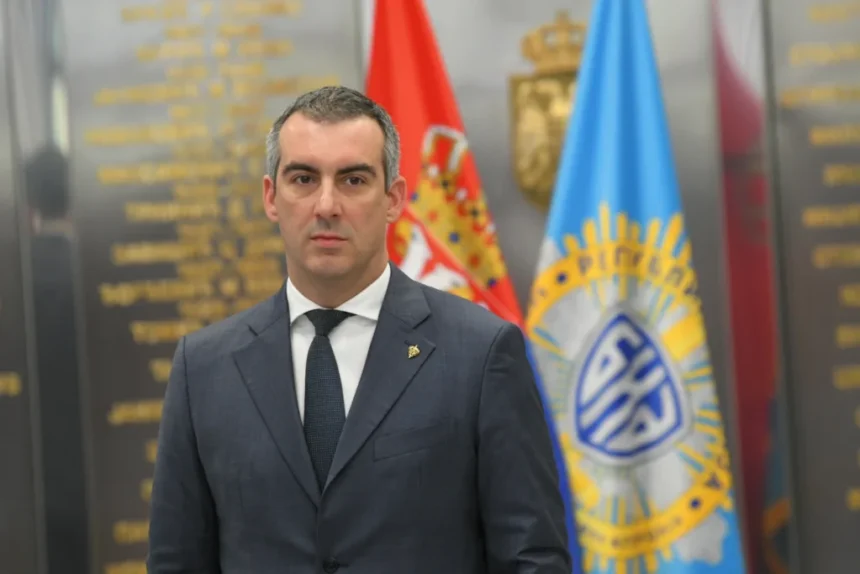
According to Radar, requests to introduce or extend the surveillance measures were signed by BIA Director Vladimir Orlić. In several instances, the Higher Court rejected the requests, citing insufficient evidence to support the agency’s allegations. In other cases, the applications were dismissed before the surveillance measures could be implemented.
University officials and student activists under surveillance
One of the documented cases concerns Danilo Potparić, chief of staff to the rector of the University of Belgrade. According to the published documents, secret surveillance measures against him were authorised in 2026, but the court rejected the BIA’s latest request for an extension on October 23.
In its application, the BIA associated Potparić with activities linked to the student movement and alleged that he had been acting in Germany’s interests.
However, the Higher Court concluded that the reports submitted by the agency did not demonstrate that his activities were directed against Serbia’s national security.
Speaking to Radar, Potparić said he was not surprised that university representatives had been targeted, but described the discovery that he had been monitored for months as a serious violation of his privacy.
He denied allegations that he had acted on behalf of a foreign state, stressing that disagreement with government policies should not be treated as a national security issue.
The investigation also documents secret surveillance targeting Srđan Milivojević, leader of the Democratic Party.
In its requests to extend the measures, the BIA alleged that he was involved in activities threatening Serbia’s security. Among the arguments cited were his previous connections with the Otpor movement and alleged training programmes in Hungary and the United States.
The Higher Court rejected the request to extend the surveillance, finding that the agency had failed to provide relevant evidence supporting its claims.
Milivojević told Radar that, in his view, Serbia’s security services have for years served the political interests of those in power rather than protecting the state and its citizens. He also claimed that he had previously received information indicating that his communications had been intercepted and his movements monitored.
Another person reportedly targeted by secret surveillance was Aleksa Mijuca, a representative of the IT Blokada association.
In its request for an extension, the BIA referred to his links with student movement activities, alleged logistical support and frequent stays abroad. On October 28, the Higher Court rejected the agency’s request to continue monitoring him.
Mijuca said the case demonstrated how security mechanisms could be used against citizens who operate publicly and legally in the interests of society.
Radar also reported on the case of Radomir Popović, president of the Independent Railway Workers’ Union of Serbia.
In its application to extend surveillance measures against him, the BIA accused him, among other things, of exerting pressure on state institutions and railway company management through trade union activities and warnings of potential strikes.
Popović said he believed the surveillance was linked to his trade union activities, his exposure of irregularities within the railway system and his efforts to raise concerns about workers’ conditions.
Allegations of unlawful surveillance methods
Beyond the court decisions, the Radar investigation raises concerns about the possible use of unlawful surveillance methods.
According to information obtained by the publication, several instances of physical monitoring and communications interception were allegedly carried out without the necessary judicial authorisation.
The report also addresses allegations that Pegasus spyware was discovered on the devices of several students, activists and civil society representatives. It further refers to claims that audio surveillance equipment had been installed in an amphitheatre at the Faculty of Law in Belgrade.
Another issue raised by the investigation concerns the inclusion of third parties’ telephone numbers in surveillance requests targeting specific individuals. According to Radar, this practice may have resulted in the monitoring of people who were in contact with those officially under surveillance.
The published documents also mention Aleksandar Barać, a prosecutor at Serbia’s Prosecutor’s Office for Organised Crime, who was reportedly placed under surveillance in April 2026.
The BIA subsequently requested the termination of the measures, arguing that the information collected did not indicate his involvement in the criminal offence of espionage.
The revelations raise further questions about the use of Serbia’s intelligence and security institutions, the protection of citizens’ privacy and the potential targeting of individuals critical of President Aleksandar Vučić and his government.