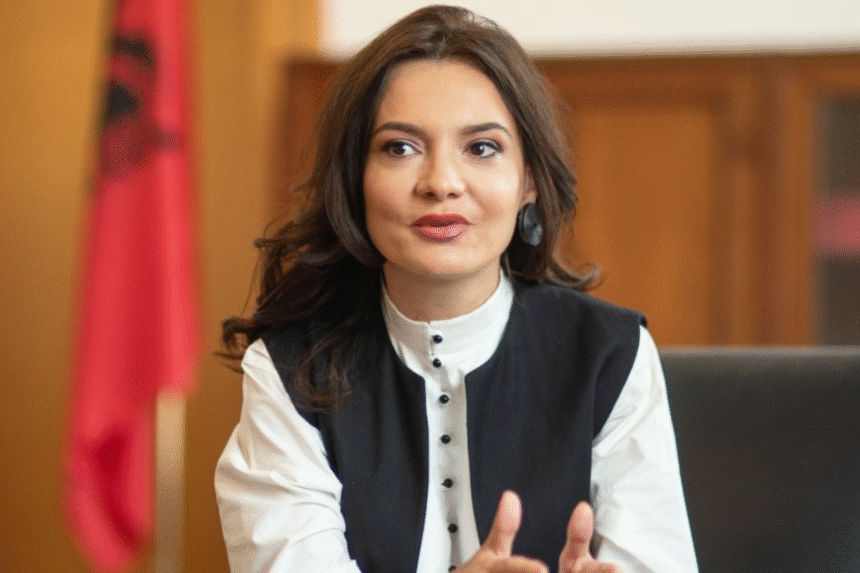
Albania’s Minister for Europe and Foreign Affairs, Elisa Spiropali, will pay an official visit to the Republic of North Macedonia on December 22 and 23, where she will be received by the highest state officials.
During her stay in Skopje, Minister Spiropali is scheduled to meet with:
- President Gordana Siljanovska-Davkova
- Prime Minister Hristijan Mickoski
- Speaker of Parliament Afrim Gashi
- Minister of Foreign Affairs and Trade, Timčo Mucunski
On Monday at 11:30 AM, Spiropali and Mucunski will hold a joint press conference.
Strengthening bilateral ties and EU integration
Throughout the visit, Minister Spiropali will emphasize the importance of further advancing bilateral and regional cooperation, while reaffirming Albania’s strong support for North Macedonia’s European integration.
She will underline that EU enlargement remains a strategic instrument for peace, stability, and democratic resilience in Southeast Europe.
Focus on Corridor VIII and regional security
A key topic of discussion will be Corridor VIII, described as a strategic energy and security project linking the Mediterranean Sea with the Black Sea, and essential for regional connectivity and resilience.
Meetings with Albanian political representatives
In Tetovo, Minister Spiropali will meet with:
- Ali Ahmeti, leader of the Democratic Union for Integration (DUI)
- Arben Taravari, leader of the Alliance for Albanians
- Leaders of the governing coalition VLEN: Izet Mexhiti, Bilal Kasami, and Bekim Sali
She will also hold discussions with:
- Deputy Prime Minister for Good Governance and Anti-Corruption, Arben Fetai
- Acting Minister for European Integration, Orhan Murtezani
- Musa Xhaferri, Chair of the Parliamentary Committee on Foreign Affairs
- Women MPs from Albanian political parties
- Albanian representatives from local government
Role of Albanians and the Ohrid Agreement
Minister Spiropali will highlight the decisive role of the Albanian community in North Macedonia in preserving stability and advancing Euro-Atlantic processes, as well as the importance of the Ohrid Framework Agreement as the foundation of multiethnic harmony and social cohesion.
Cultural and academic engagements
The visit will include a stop at the Institute of Albanian Cultural and Spiritual Heritage in Skopje, and will conclude with an open discussion at the University of Tetovo.