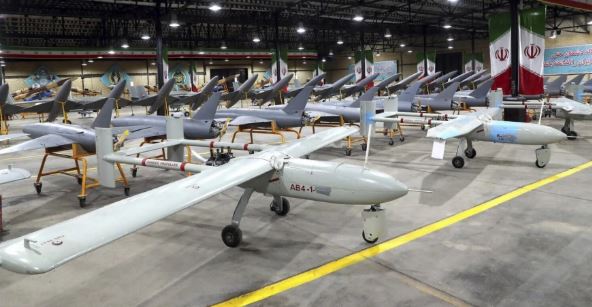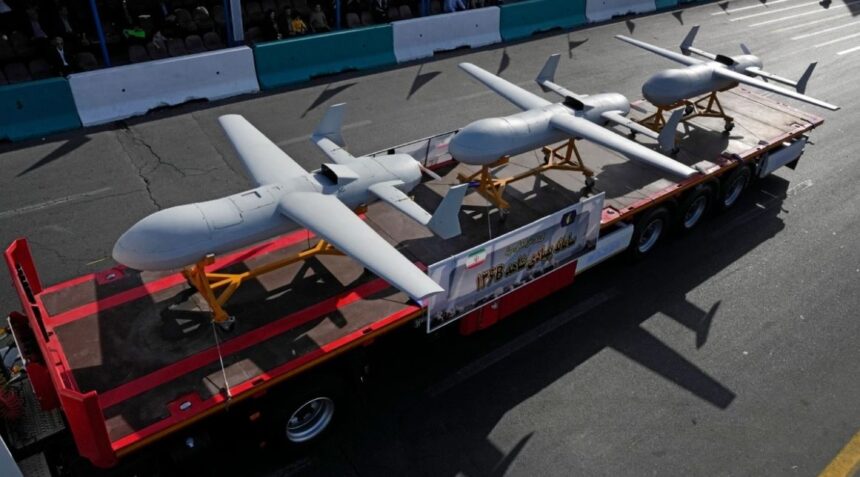
Iran has already resumed drone production during the ceasefire that began in early April, signaling that it is rapidly rebuilding parts of its military capabilities damaged by US and Israeli strikes.
According to sources familiar with US intelligence assessments cited by CNN, Iran’s military appears to be recovering much faster than initially expected.
The rebuilding of military capabilities including replacing missile bases, launchers, and production capacity for critical weapons destroyed during the conflict means Iran remains a significant threat to regional allies if Donald Trump decides to restart the aerial campaign, the sources said.
At the same time, questions are being raised about the long-term extent of the damage inflicted on Iran’s military capabilities by the US-Israeli attacks.
While timelines vary depending on the type of weapons system, some US assessments suggest Iran could fully restore its drone strike capability within just six months, one source told CNN.
“The Iranians have exceeded all the projected timelines for recovery,” a US official said.
Drone threat remains a major concern
Drone attacks are seen as a particular concern for regional allies. If hostilities resume, Iran could compensate for its weakened missile arsenal by increasing drone launches targeting Israel and Gulf states within range.
Trump has repeatedly threatened to resume military operations against Iran if negotiations fail, including public remarks suggesting he was “an hour away” from restarting bombings.
According to one source, Iran has managed to reorganize far faster than expected thanks to several factors — including support from Russia and China, as well as the fact that the US and Israel did not inflict as much damage as intended.
For example, China reportedly continued supplying Iran with missile components during the conflict, although deliveries were limited by the ongoing US blockade of Iranian ports.
Israeli Prime Minister Benjamin Netanyahu also claimed in an interview with CBS that China was supplying Iran with “missile components,” though he provided no further details. China’s Foreign Ministry denied the accusation, calling it “baseless.”
Iran still retains major military capabilities
According to recent US intelligence assessments, Iran still maintains significant ballistic missile, drone, and air defense capabilities despite suffering heavy damage during the conflict.
This means Tehran’s rapid reconstruction effort is being built on an already existing military infrastructure.
A spokesperson for US Central Command declined to comment, saying the agency does not discuss intelligence matters.
Pentagon spokesperson Sean Parnell told CNN that “the US military is the strongest in the world and has all the tools necessary to execute the President’s orders whenever and wherever he chooses.”
Around half of Iran’s missile launchers survived
CNN previously reported in April that US intelligence agencies estimated roughly half of Iran’s missile launchers survived the attacks.
A more recent report increased that estimate to around two-thirds, partly because the ongoing ceasefire has allowed Iran time to recover launchers buried under debris from previous strikes.
US intelligence assessments also include launchers that remain temporarily inaccessible but not destroyed.
According to two sources cited by CNN, thousands of Iranian drones still exist roughly 50 percent of the country’s drone capability.
A significant portion of Iran’s coastal defense missile systems also reportedly remains intact, largely because US strikes were not focused on coastal military infrastructure, despite attacks on ships.
These systems are considered critical because they allow Iran to threaten maritime traffic in the Strait of Hormuz.
Overall, recent US intelligence reports conclude that while the war significantly degraded Iran’s military capabilities, it did not destroy them, and Iran appears capable of limiting the long-term impact of the conflict through rapid reconstruction efforts.