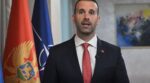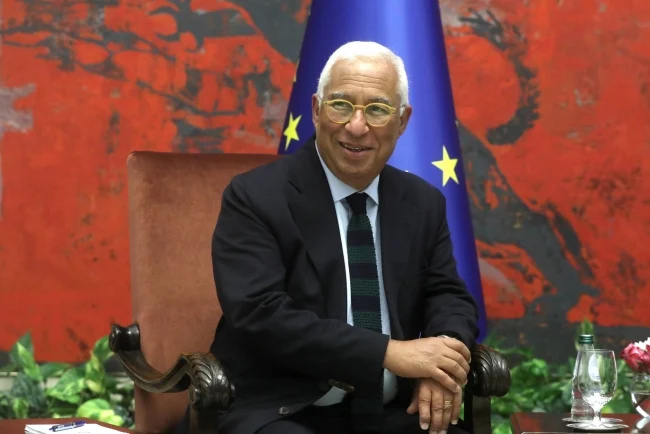
European Council President António Costa and Czech Prime Minister Andrej Babiš said in Prague on Thursday that Montenegro has a realistic chance of joining the European Union in 2028, as Costa described enlargement to the Western Balkans as a geopolitical priority.
“Enlargement is a geopolitical priority, first and foremost in the Western Balkans, but also regarding Ukraine and Moldova,” Costa said at a press conference following talks with Babiš.
Costa stressed that the enlargement process remains merit-based and depends on candidate countries meeting the required criteria. He said Montenegro is currently the country that has advanced furthest in the accession process and expressed optimism that it could complete negotiations on all remaining chapters by the end of 2026.
According to Costa, Montenegro could then use 2027 to negotiate the accession treaty with the EU. He also said that a working group has already been established to prepare the agreement.
“We have already formed a working group to prepare the agreement on joining the EU,” Costa said.
Costa added that enlargement requires efforts from both sides. While candidate countries must implement reforms, the EU itself must also adapt its institutions to prepare for future enlargement, with proposals expected next year.
Babiš echoed Costa’s assessment, saying Montenegro is ready for EU membership and expressing hope that it could become the bloc’s 28th member in 2028.
“I hope that, symbolically, it will enter the EU as its 28th member in 2028,” Babiš said, noting that Western Balkan countries have been waiting for membership for a long time and that Montenegro’s NATO membership further strengthens its position.
Costa also said he was optimistic that EU member states would reach agreement by the end of 2026 on the bloc’s next seven-year budget for 2028–2034.
He said the EU would seek to preserve funding for traditional priorities such as agriculture while also finding additional resources for emerging priorities, particularly defence and security.
Babiš, however, criticized proposed reductions in cohesion and agricultural funding, arguing that greater investment in defence and technology should not come at the expense of less-developed regions and economies.
“Our future budget must not worsen the position of weaker economies and industrial countries,” Babiš said.
Costa is visiting EU member states in an effort to gather national priorities and concerns and help build a compromise on the bloc’s next multiannual financial framework.
For Montenegro, the message from Prague was notably positive: with continued progress on reforms and accession negotiations, 2028 remains a realistic target for EU membership.