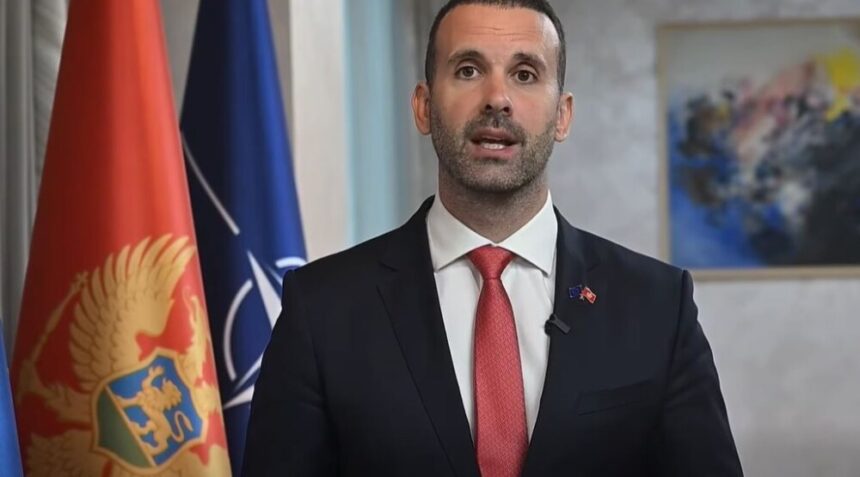
Montenegrin Prime Minister Milojko Spajić has warned that Montenegro could face a coordinated hybrid campaign aimed at destabilizing the country as it prepares to close additional EU accession negotiating chapters.
Spajić said the government had received what he described as “serious security operational information” indicating that officials from at least two countries in the region were involved in preparations for coordinated hybrid activities.
“We have serious security operational information that the announced closing of new negotiating chapters will be accompanied by coordinated hybrid activities, involving officials from at least two countries in the region,” Spajić wrote on X.
According to the prime minister, the activities are allegedly intended to destabilize Montenegro and could receive support from certain domestic political actors and parts of the country’s media landscape.
“We know about these intentions and are aware of their goal. Attempts at destabilization will not change our course or stop Montenegro’s European path, which is greater than the daily interests of any political structure,” Spajić said.
Spajić did not identify the countries or officials he was referring to, nor did he publicly provide further details about the alleged planned activities.
Montenegro prepares to close four EU negotiating chapters
The warning comes as Montenegro advances in its EU accession negotiations.
The EU Council’s Working Party on Enlargement is scheduled to examine draft positions on September 1 concerning the possible closure of four negotiating chapters: Chapter 14 on transport policy, Chapter 12 on food safety, Chapter 18 on statistics, and Chapter 19 on social policy and employment.
No final EU decision has yet been announced, but the four chapters could potentially be closed at the next Intergovernmental Conference between Montenegro and the European Union, expected to take place next month.
Montenegro is currently the most advanced EU candidate country in the Western Balkans, and its government has set an ambitious goal of completing accession negotiations and joining the EU in 2028.
Spajić’s warning therefore links the country’s accelerating European integration process with what he describes as a potential regional effort to undermine political stability.
If the government’s allegations are substantiated, the episode would add to broader concerns across the Western Balkans over foreign interference, disinformation and hybrid activities targeting countries pursuing closer integration with the European Union and NATO.