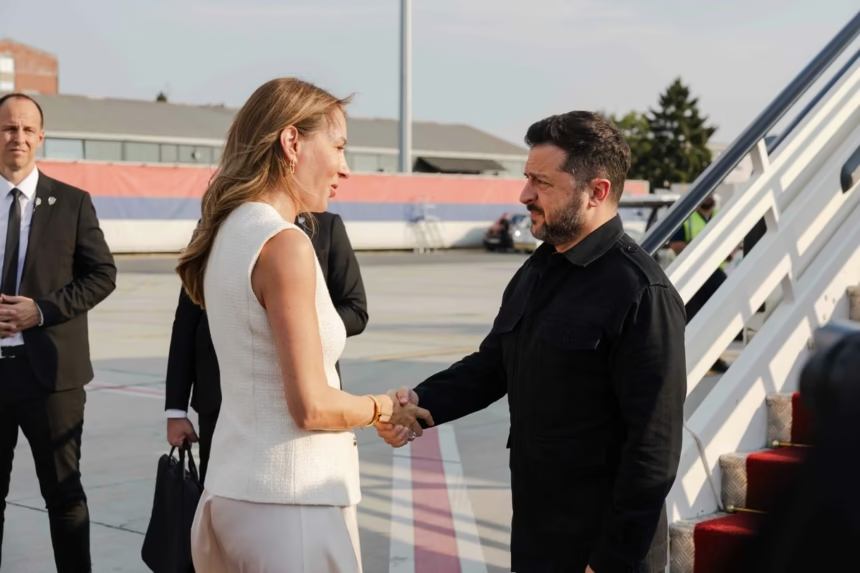
Ukrainian President Volodymyr Zelenskyy’s arrival in Belgrade puts Serbian President Aleksandar Vučić in what Deutsche Welle has described as a “political minefield,” amid Serbia’s delicate balancing act between its traditional ties with Moscow and its aspirations for European Union membership.
In its Serbian-language edition, Deutsche Welle noted that Serbia is widely perceived in the European press as being “pro-Russian oriented,” a factor that has contributed to opposition in Kyiv to Zelenskyy’s visit.
The German broadcaster also pointed to the political sensitivities facing Vučić at home, noting that much of his electorate remains sympathetic toward Russia and opposed to Serbia joining the EU.
“This may be why the meeting in Belgrade was postponed several times, although there had been indications that it would take place,” Deutsche Welle reported. First Lady Olena Zelenska visited Serbia two years ago, while Vučić and Zelenskyy have met several times on the sidelines of international summits.
Despite Serbia’s refusal to join Western sanctions against Russia, Deutsche Welle noted that Serbian weapons have reached Ukraine through intermediaries. The Financial Times estimated in 2024 that the value of such exports was close to €1 billion.
The report also highlighted speculation about a potential joint drone factory involving Ukraine, Serbia and the United Arab Emirates. According to the report, the proposed arrangement would involve Ukrainian technological expertise, Serbian workers and Emirati capital, while people close to Zelenskyy had reportedly visited potential sites in Serbia discreetly.
Zelenskyy’s visit therefore carries significance beyond the officially announced agenda of bilateral, economic and European integration issues. For Vučić, the meeting represents another attempt to maintain Serbia’s relationships with both Russia and the EU while avoiding a decisive break with either side.
At the same time, Zelenskyy’s presence in Belgrade sends a political message to Moscow, given Serbia’s longstanding relationship with Russia and its continued refusal to impose sanctions over the war in Ukraine.