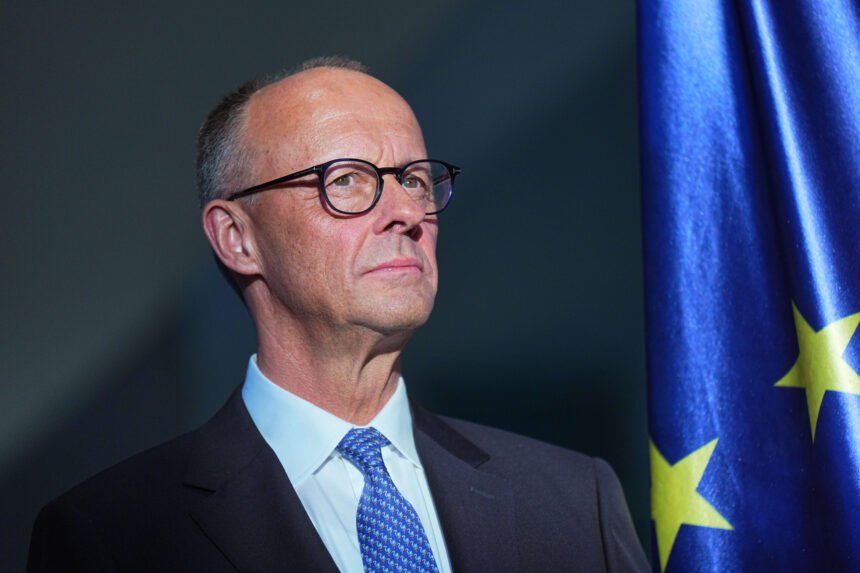
Chancellor Friedrich Merz has set a historic, bleak record in German politics. According to recent polling data, the CDU leader has reached the lowest approval ratings ever recorded for a sitting German Chancellor—even slipping below the worst figures of his predecessor, Olaf Scholz.
A recent Infratest dimap survey reveals a stark reality: only about one in six Germans (roughly 16%) express satisfaction with Merz’s executive performance.
The Anatomy of the Decline: What the Experts Say
Political analysts and communication experts point to a destructive combination of intra-governmental gridlock, a self-styled “reformist” persona, and repeated rhetorical missteps.
1. A Reformer, Not a Consensus Builder
Stefan Merz, an election researcher and director at Infratest dimap (no relation to the Chancellor), underscores that Friedrich Merz’s decline has been remarkably rapid compared to previous leaders like Angela Merkel.
Stefan Merz (Infratest dimap): “The figures are dramatic. There is no other way to say it… Chancellor Merz probably doesn’t even expect to hit 60% or 70% approval. He views himself as a ‘reform Chancellor’ rather than a ‘consensus Chancellor.'”
The polling director attributes the drop to continuous coalition infighting over systemic domestic issues:
- The Constitutional Court Standoff: Political gridlock ignited early on when the CDU/CSU union blocked crucial appointments to the Federal Constitutional Court.
- Domestic Friction: Deep policy divisions over migration, pension reform, and a highly publicized, combative dispute between the Chancellor and Labor Minister Bärbel Bas (SPD).
- The Collective Image: Ultimately, the numbers reflect a devastating public perception of the entire federal government’s efficacy.
2. Accusations of Rhetorical “Unprofessionalism”
Olaf Kramer, a professor of rhetoric and speech communication at the University of Tübingen, offers a far sharper critique of the Chancellor’s executive leadership style. Despite Merz’s historical reputation as a sharp debater, Kramer flags a distinct lack of professionalism regarding how his words resonate from the Chancellor’s podium.
Kramer specifically points to Merz’s controversial “urban landscape” (peizazhi urban) remarks made in October 2025. During a Berlin press conference, Merz vaguely linked visual changes in public spaces to illegal migration and deportations, later clarifying that he meant undocumented migrants who “do not follow the rules” and dominate transit hubs or parks.
Kramer characterizes this messaging as highly dangerous:
- “Fishing in Muddy Waters”: By keeping descriptions deliberately ambiguous, Merz leaves a rhetorical vacuum that far-right extremist parties can easily exploit.
- Institutional Failure: Kramer notes that such unpolished, reactionary rhetoric should never slip past a professionally managed Federal Chancellery.
- The Say-Do Gap: Merz’s trademark style consists of swift, aggressive announcements promising sweeping overhauls. However, when political action fails to follow the grand rhetoric, public trust is severely and permanently eroded.
Merz's Controversial Rhetorical Timeline
========================================================================
Opposition Era --> Labeled migrant children "little pashas" (*pashallarë të vegjël*).
Opposition Era --> Accused Ukrainian refugees of "welfare tourism."
Post-Election  --> Strained diplomatic ties via personal insults toward US & Brazilian Presidents.
October 2025   --> Sparked domestic outrage over "urban landscape" migration comments.
Mid-2026       --> Approval ratings plummet to a historic low of ~16%.
========================================================================
Is a Political Turnaround Still Possible?
Despite the pervasive skepticism clouding Berlin, polling data shows that German Chancellors have historically bounced back from profound unpopularity.
- The Historical Precedent: Former Chancellor Gerhard Schröder (1998–2005) saw his personal approval plunge to 25% following painful economic overhauls, only to claw back to 50% by the end of his legislative term. Similarly, Angela Merkel navigated severe cyclical fluctuations throughout her 16 years in office.
- The Path Forward: With a significant portion of the legislative period still remaining, experts agree there is room to maneuver. However, to engineer a true turnaround, the Merz administration must pivot away from combative party politics.
As Professor Kramer concludes, a successful head of government requires a reconciliatory rhetoric capable of building bridges. To regain the nation’s confidence, the current cabinet must stop chasing short-term headlines and demonstrate that they can govern effectively, predictably, and quietly.