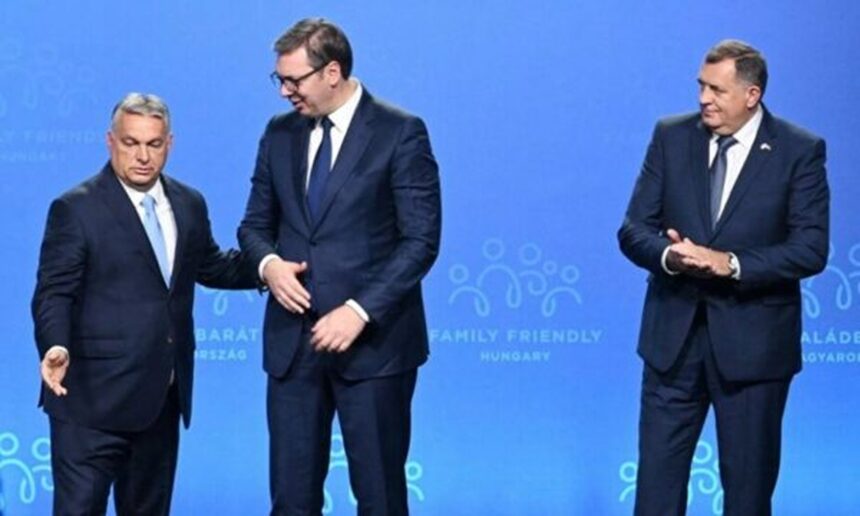
The fall of Viktor Orbán is not just a routine transfer of power in Hungary, but a direct blow to the Orbán–Dodik–Vučić political axis, which for years functioned as a coordinated network of influence in the region, writes Deutsche Welle.
Strong political and financial ties
The relationship between Orbán and Milorad Dodik went beyond traditional diplomacy. Hungary invested directly in Republika Srpska through projects in energy, infrastructure, and agriculture, exceeding €100 million.
These projects were not only developmental but also tools of political and strategic influence in Bosnia and Herzegovina and beyond.
For Dodik, Orbán was a strong voice within the European Union, helping soften Western pressure and providing political legitimacy to his policies.
A shift in Budapest
With Péter Magyar coming to power, a noticeable shift in policy toward the Balkans is expected. The new approach is likely to rely less on personal alliances and more on institutional EU standards.
This suggests that unconditional support for actors like Dodik may fade, while existing projects could be reassessed or subjected to stricter conditions.
Consequences for Vucic and Dodik
For Dodik, this marks the loss of a key international ally at a time of ongoing tensions with the institutions of Bosnia and Herzegovina.
For Aleksandar Vučić, it means losing a crucial partner within the EU who enabled his balancing strategy between Brussels, Moscow, and national interests.
In this context:
- the narrative of “alternative European support” weakens
- political influence within EU institutions diminishes
- pressure increases to align with EU policies
Reactions and expectations
Elmedin Konaković welcomed the change, calling it an opportunity for a new chapter in relations with Hungary based on respect and European values.
Meanwhile, Milorad Dodik stated that cooperation should continue, emphasizing that Republika Srpska has functioned without such support before.
A new political reality
Orbán’s loss is not merely a domestic Hungarian development—it carries regional consequences. It signals the end of a political model where certain Balkan leaders relied on personal alliances within the EU to cushion international pressure.
Now, both Vučić and Dodik face a new reality: less external backing and greater challenges in redefining their positions in a Europe that may be less tolerant of their policies.