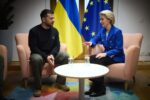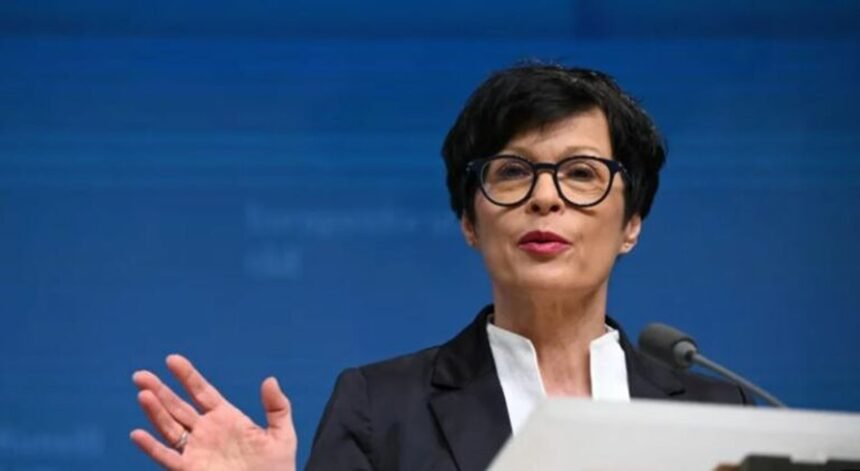
European Commissioner for Enlargement Marta Kos has outlined a major reform of the European Union’s enlargement policy, calling for more flexible decision-making, gradual integration of candidate countries and stronger safeguards to prevent democratic backsliding among future members.
Speaking at the Conference of Croatian Ambassadors in Zagreb, Kos presented key elements of the European Commission’s forthcoming review of enlargement policy, which is expected to examine how the EU can prepare for a future with more than 30 member states.
Kos described the current moment as a new “Helsinki moment,” referring to the period of European cooperation that preceded the major post-Cold War enlargement of the EU.
“In my view, we need to address four questions in order to build consensus at the highest level and welcome new member states,” Kos said.
Moving beyond the “all-or-nothing” approach
Kos argued that an enlarged EU would require significant institutional reforms to ensure that the bloc remains capable of acting quickly and effectively, particularly during times of crisis.
She said some changes to decision-making procedures and institutional arrangements could be introduced without revising the EU treaties, which would otherwise require lengthy negotiations and potentially unpredictable ratification processes among member states.
“We should use this to make decision-making more efficient and flexible,” Kos said, suggesting that the number of areas in which a single member state can block decisions affecting the entire bloc could be reduced.
She also pointed to enhanced cooperation mechanisms that allow groups of EU member states to advance initiatives when others are not yet ready to participate. Such mechanisms have already been used in areas including the Schengen zone and the euro.
Kos said enlargement itself must evolve to reflect the geopolitical and political realities facing Europe.
“We need to move away from the ‘all or nothing’ logic of enlargement. We need a more structural approach to bridge the time that we no longer have,” she said.
Gradual integration for candidate countries
One of the central elements of the proposed reform is greater use of gradual integration, which could allow candidate countries to gain tangible benefits from closer integration with the EU before full membership.
Kos noted that some such benefits already exist, including participation in the Single Euro Payments Area (SEPA) and greater integration with the EU energy network.
“These are positive steps. But it is not enough,” she said, stressing that Brussels must also assess the impact of future members on existing EU countries and protect the bloc from potential risks.
The idea of gradual integration has received support from several EU countries, particularly France and Germany, which have argued that the enlargement methodology should be reconsidered.
Kos warned that lengthy accession processes could create opportunities for political opponents of the EU to exploit uncertainty and exert pressure on candidate countries.
Stronger safeguards against democratic backsliding
Another major element of the proposed approach involves strengthening mechanisms designed to protect democracy, the rule of law and fundamental EU values after countries join the bloc.
“We must go a step further. We must make sure that we do not let Trojan horses in. Not today, nor in 10 or 20 years,” Kos said.
She argued that recent experience demonstrated the need for stronger safeguards capable of preventing, and if necessary correcting, violations of the EU’s fundamental principles and values.
The proposal could therefore have significant implications for candidate countries, which would face not only requirements to meet EU standards before accession but potentially stronger mechanisms for maintaining those standards after joining.
Vučić says Serbia remains on the European path
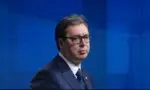
Serbian President Aleksandar Vučić also commented on Kos’s proposals during a visit to Serbia’s Rasina District.
Responding to her reference to “Trojan horses,” Vučić made a sarcastic remark about the metaphor but said Serbia remained committed to its European path.
“If I were cynical and a little impolite, I would say that Marta Kos would rather see some sheep than horses, but I am not, so I will not say that,” Vučić said.
He added that Serbia wanted continued cooperation with the EU while pursuing its own economic development.
“We will continue to be on the European path, but we want to grow a little faster and develop a little faster,” Vučić said.
The proposed overhaul of the EU enlargement process could therefore become particularly important for Serbia, which has been an EU candidate country for more than a decade. A shift toward gradual integration could offer Belgrade earlier access to certain EU benefits while simultaneously placing greater emphasis on democratic standards, institutional reforms and the long-term credibility of the accession process.