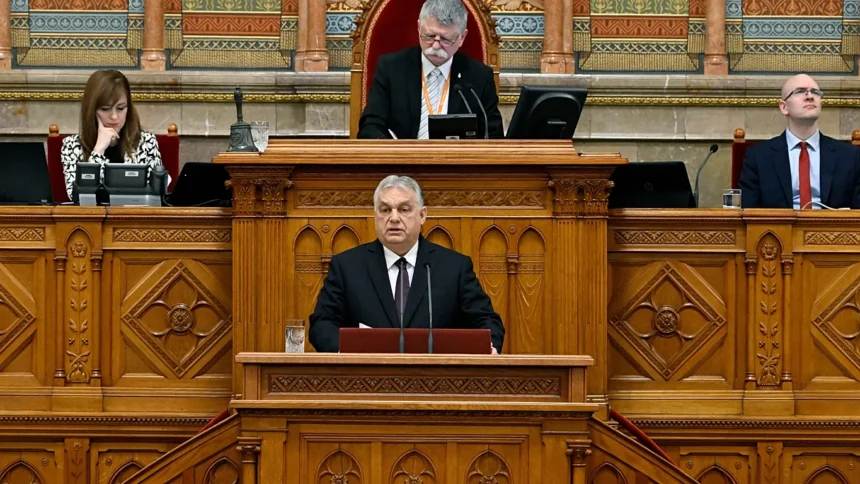
Hungarian Prime Minister Viktor Orbán has ordered the deployment of soldiers to protect key energy facilities across the country, citing concerns that Ukraine could take actions that might disrupt Hungary’s energy system.
The announcement followed a meeting of Hungary’s Defence Council, after which Orbán released a video statement on social media outlining the government’s response. He stressed that Hungary would not “give in to blackmail” and confirmed that security around critical energy infrastructure would be significantly strengthened.
According to Orbán, the decision comes after reports from national security services suggesting potential risks to Hungary’s energy supply network. Military units and specialized equipment will be positioned near priority energy sites, while police forces will intensify patrols around power plants, distribution hubs, and control centers.
The move also includes a ban on drone flights in the border region of Szabolcs-Szatmár-Bereg county, which lies close to Ukraine. Authorities say the restriction is intended to prevent surveillance or potential threats to sensitive facilities.
The tensions escalated after Russian oil deliveries to Hungary through the Druzhba pipeline stopped on 27 January. While Hungarian officials have accused Kyiv of using the disruption as political pressure, reports indicate the pipeline was heavily damaged in an airstrike carried out by Russian forces.
Hungary remains highly dependent on external energy supplies, making the security of pipelines and energy infrastructure a strategic priority for the government. Analysts say the latest measures reflect growing concerns in Central Europe over energy stability and the broader geopolitical fallout from the war in Ukraine.
Despite the heightened rhetoric, Budapest has not provided detailed evidence of imminent Ukrainian actions, though officials insist the precautionary steps are necessary to safeguard national energy security.