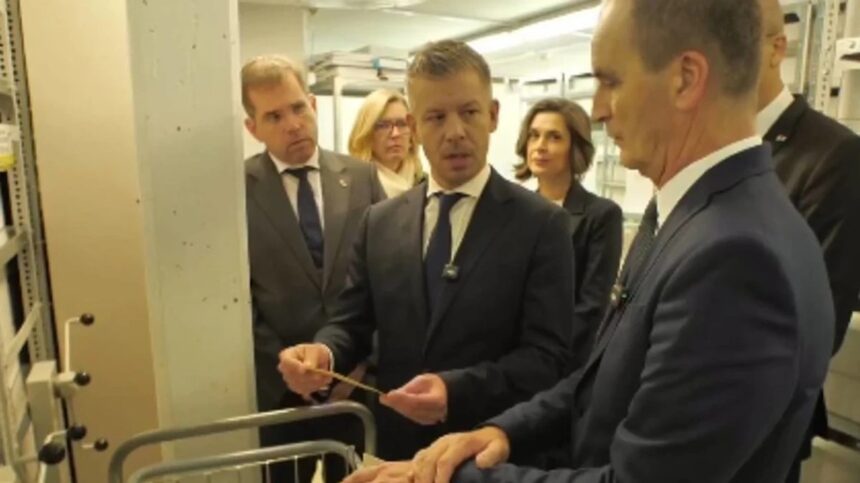
Hungary has published the names and personal details of approximately 60,000 people who collaborated with the secret police during the communist regime, in an initiative aimed at exposing one of the darkest and most sensitive chapters in the country’s history.
The documents have been made available through an online platform, revealing the informants’ real names, secret aliases, dates of birth, addresses and other personal information.
The files also contain details about the reasons that led individuals to cooperate with the communist authorities, including cases in which people were forced into collaboration through threats, intimidation or blackmail.
Hungarian Prime Minister Peter Magyar said the publication would help citizens confront the country’s past and the trauma inflicted by the communist regime.
“Many families will now face difficult information, often involving a deceased family member. It is impossible to confront trauma without talking and asking questions,” Magyar stated.
The publication date, November 4, was chosen symbolically. On this day in 1956, Soviet tanks entered Budapest and other Hungarian cities to crush the Hungarian Revolution against communist rule.
Historical estimates suggest that Hungary’s secret services recruited between 150,000 and 160,000 informants between December 1944 and February 1990.
Some collaborated voluntarily, while others were coerced through pressure, threats and blackmail. Communist authorities also threatened citizens with losing their jobs, educational opportunities or access to medicine to force them to provide information.
However, the disclosure has also sparked controversy. Critics warn that the records are incomplete and that revealing names without explaining the circumstances of collaboration could lead to injustices and renewed conflicts within families.
A second collection of documents, containing more detailed information about the recruitment of informants and their activities, is expected to be published on February 25.