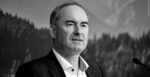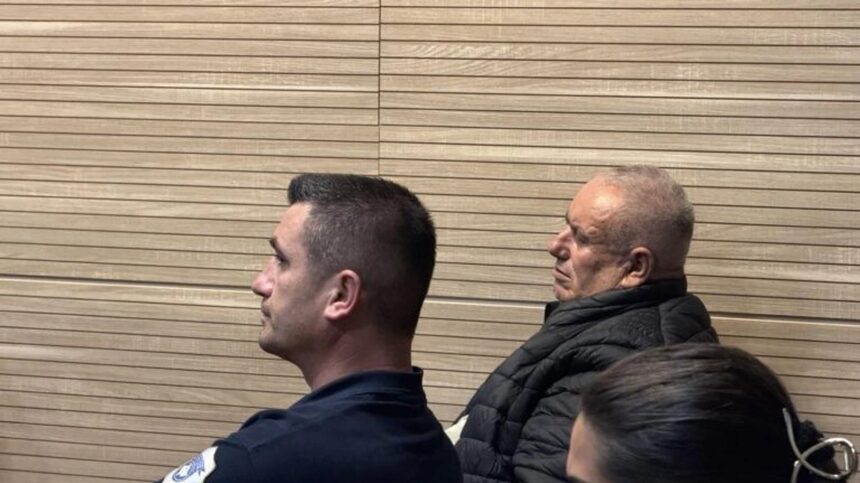
The trial of Ramadan Morina, who is accused of war crimes in the municipality of Malisheva, continued at the Basic Court in Prishtina on November 4, 2026.
Morina is accused of participating, alongside members of Serbian police and military forces, in the killing of 34 Albanian civilians in the village of Burim, Malisheva, on March 31, 1999.
Two witnesses testified before the court during Wednesday’s hearing.
Witness Zejnije Morina told the court that she believed the defendant, Ramadan Morina, was innocent, claiming she had never heard anything bad about him. She said she was surprised when she learned of his arrest and described the accusations against him as fabrications.
“We consider him innocent. People have made allegations before and after the war. I have never heard anything bad about him. We were surprised when we heard he had been arrested,” the witness stated.
She added that his arrest had saddened her, insisting that he was innocent in the eyes of her family and the community.
The witness also recounted how she and her family were forced to leave their home during the war. She testified that on March 31, 1999, Serbian forces arrived at a location known as Vrella with two tanks and three to four trucks. According to her testimony, the police officers wore camouflage uniforms, were armed and had painted faces.
Approximately 500 people had gathered at Vrella, where Serbian forces allegedly demanded money from them in Serbian. The men were separated from the women.
The witness confirmed that her husband was among those killed at Vrella, while her mother-in-law was killed at their home two weeks later.
“My husband was killed at Vrella, and my mother-in-law was killed at home two weeks later,” she testified.
Witness Enver Hoti also testified, stating that he had remained in Kosovo throughout the war, particularly in the municipality of Malisheva and its surrounding villages.
Regarding the massacre in Burim, Hoti told the court that he and three other men had seen victims who had been killed, mutilated and burned. According to his testimony, some of the victims were still burning in tractor trailers when he saw them.
Hoti also explained a social media post he had published following Morina’s arrest, saying that the arrest had reminded him of alleged collaboration between certain individuals, including the defendant, and Serbian police.
He stated that he had served in the Kosovo Liberation Army (KLA) since May 1995 and had been involved in identifying Albanians suspected of collaborating with Serbian forces.
According to Hoti, these individuals maintained contact with Serbian police officers.
“They communicated with Serbian police, drank coffee with them, and in our opinion, they were collaborators. Otherwise, it would have been impossible to maintain relations with them,” he told the court.
Regarding Morina, Hoti said he had not seen him since 1998, adding that the defendant had lived in the Serb neighbourhood of Rahovec.
“I am a witness in this case because the person in question and others collaborated with the occupier,” Hoti declared.
When questioned by the defence about why he had not reported Morina to the police earlier if he knew about his alleged role, Hoti responded that after the war everyone had focused on their own affairs.
Defence lawyer Arianit Koci raised objections during Hoti’s testimony, arguing that the principle of equality between the parties was being violated. He claimed that the prosecution was being allowed to ask questions outside the scope of the indictment, while the defence was not being granted the same opportunity.
The trial panel consists of judges Rrahman Beqiri (presiding), Violeta Namani-Hajra and Donikë Shala-Abdyli.
At the initial hearing held on December 31, 2026, Morina pleaded not guilty to the charges brought against him by the Special Prosecution Office.
“I do not accept the charges because I was not in Kosovo at all between 1998 and 1999. I have evidence,” the defendant stated.
Ramadan Morina was arrested in Prishtina on the morning of August 12, 2025, on suspicion of committing war crimes against the civilian population. His detention hearing was held at the Basic Court in Prishtina on August 14, 2025.
THE PROSECUTION’S CASE
According to the indictment filed by the Special Prosecution Office, Ramadan Morina is accused of participating in killings, physical and psychological abuse, arrests, looting and the destruction of property belonging to Albanian civilians.
The prosecution alleges that these acts were committed during 1998–1999, throughout the war in Kosovo, in cooperation with members of Serbian police and military forces, in violation of international conventions.
The indictment further states that Morina participated in operations in which more than 30 Albanian civilians were killed in the village of Burim, in the municipality of Malisheva.
According to the prosecution, the killings took place during an armed operation in which Serbian forces, using tanks, armoured vehicles and infantry units, surrounded an area where more than 1,000 civilians displaced from several villages in Malisheva had sought shelter.
The indictment states that one civilian survived the operation by lying among the victims and pretending to be dead. He is also a witness in the proceedings.
Morina is charged with war crimes against the civilian population. The allegations remain subject to judicial examination, and he is presumed innocent until proven guilty.
WAR CRIMES TRIALS
During and after the 1998–1999 war in Kosovo, senior political and military officials of the former Yugoslavia and Serbia were prosecuted for war crimes and crimes against humanity committed by Serbian and Yugoslav forces.
Former Yugoslav President Slobodan Milošević was charged with war crimes and crimes against humanity committed by Serbian and Yugoslav forces in Kosovo, as well as in Bosnia and Herzegovina and Croatia.
His trial before the International Criminal Tribunal for the former Yugoslavia (ICTY), based in The Hague, never reached a verdict because Milošević died in detention on March 11, 2006.
Milan Milutinović, former President of Serbia, was acquitted of war crimes charges relating to the conflict in Kosovo.
Nikola Šainović, former Deputy Prime Minister of the Federal Republic of Yugoslavia, was sentenced to 18 years in prison for crimes against humanity and violations of the laws or customs of war.
Dragoljub Ojdanić, former Chief of the General Staff of the Yugoslav Army, was sentenced to 15 years in prison for crimes against humanity.
Nebojša Pavković, former commander of the Yugoslav Army’s Third Army, was sentenced to 22 years in prison for crimes against humanity and violations of the laws or customs of war.
Vladimir Lazarević, former commander of the Yugoslav Army’s Priština Corps, was sentenced to 14 years in prison for crimes against humanity.
Sreten Lukić, former head of the Serbian Ministry of Internal Affairs staff for Kosovo, was sentenced to 20 years in prison for crimes against humanity and violations of the laws or customs of war, Kallxo reports.