Diplomatic tensions between Montenegro and Croatia reached a new high today as Montenegro officially marked its first “Day of Remembrance for the Victims of Genocide in the Jasenovac, Mauthausen, and Dachau Camps.”
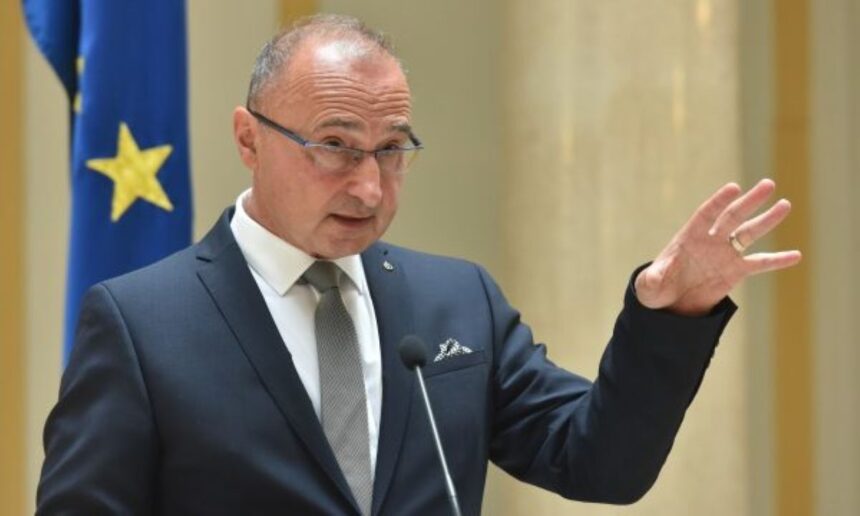
The official program, held in the Montenegrin Parliament, has been met with fierce criticism from Zagreb. Croatian Foreign Minister Gordan Grlić Radman slammed the move, labeling it a politically motivated provocation initiated by pro-Serbian forces.
Radman: “Srebrenica Deniers Have No Legitimacy”
Speaking after a government session in Zagreb, Minister Radman directed his criticism at Andrija Mandić, the Speaker of the Montenegrin Parliament and leader of the pro-Serbian coalition, who was the primary architect of the resolution.
Radman argued that those who refuse to acknowledge the 1995 genocide in Srebrenica are using the victims of the WWII-era Jasenovac camp as a political tool.
“Those who identify with the Chetnik legacy and deny the genocide in Srebrenica have the least legitimacy to speak about Jasenovac,” Radman stated. “This act is not a sincere show of respect for the victims, but a deliberate attempt to deepen political divisions and strain relations with Croatia.”
The Shadow of the 1990s
The Croatian Minister emphasized that if Montenegro truly wants to face its past, it should focus on its own role during the Yugoslav Wars of the 1990s. He specifically cited:
- The Siege of Dubrovnik: The 1991 bombardment of the Croatian coastal city by the Yugoslav People’s Army (JNA), supported by Montenegrin reservists.
- The Morinj Camp: The detention center in Montenegro where Croatian prisoners of war and civilians were tortured and abused.
A First in Montenegro’s Parliament
The commemoration follows a controversial resolution passed by the Montenegrin Assembly in June 2024. The vote was pushed through by the ruling majority but boycotted by the pro-Western opposition, who argued that the resolution was a directive from Belgrade aimed at complicating Montenegro’s EU path.
Key Figures of the Resolution:
- Andrija Mandić: Driven by his coalition’s pro-Serbian stance, Mandić framed the remembrance as a “moral obligation” to honor the hundreds of thousands of Serbs, Jews, and Roma killed in the Ustaše-run camps.
- The Opposition: Argues that the resolution is a “foreign policy minefield” designed to alienate Croatia, an EU member state whose support is crucial for Montenegro’s accession.
EU Accession at Risk?
Minister Radman warned that such moves signal a departure from European values. “Montenegro must prove it is a true advocate for EU membership,” he noted, hinting that Croatia could potentially use its position within the EU to block progress on certain chapters if Montenegro continues to engage in “revisionist and provocative” policies.
As the official ceremony concludes in Podgorica today, the diplomatic “freeze” between the two neighbors appears set to continue, adding another layer of complexity to the already volatile political landscape of the Western Balkans.