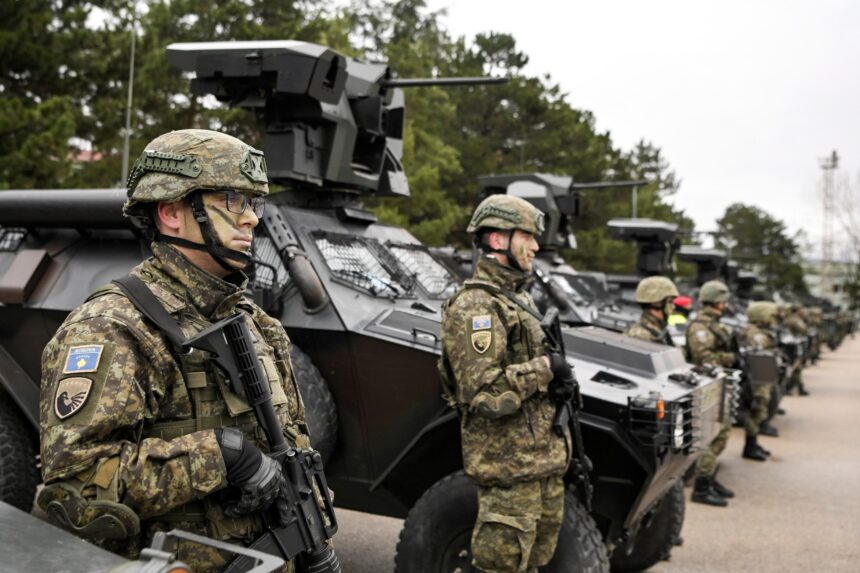
Kosovo is expected to complete one of the most significant milestones in its security sector in 2028, marking the end of the Kosovo Security Force’s (KSF) 10-year transformation into a modern military force with full defense capabilities.
Throughout the transition, the KSF has expanded its mandate, increased personnel, invested in new equipment and training, and strengthened cooperation with NATO member states. Participation in international missions, including the deployment to Gaza, and the enhancement of operational capabilities are regarded as key achievements of the transformation process.
However, security experts say that while the completion of the transition will bring Kosovo closer to NATO military standards, membership in the Alliance will ultimately depend on political rather than military considerations.
Retired KSF General Kadri Kastrati said Kosovo has made significant progress but argued that greater investment is still needed over the next two and a half years, particularly in acquiring heavy military equipment.
“With two and a half years remaining until the end of 2028, the current or future government should allocate a larger defense budget to fulfill all obligations outlined in the 10-year development plan,” Kastrati told RTK.
Security analysts emphasize that Kosovo’s path to NATO requires unanimous approval from all member states. A major obstacle remains the fact that several NATO members have yet to recognize Kosovo’s independence.
Security expert Fatmir Çollaku described the lack of universal recognition as the principal barrier to membership, stressing that sustained diplomatic efforts will be essential.
“This remains the main obstacle. Kosovo must work politically and diplomatically to persuade those countries to recognize its independence or find a special arrangement that would allow Kosovo to join NATO as an equal member, which is also in the Alliance’s strategic interest,” he said.
Other analysts argue that the KSF’s participation in the international stabilization mission in Gaza has strengthened Kosovo’s credentials as a reliable security partner and could support its future bid to join NATO’s Partnership for Peace program.
Security analyst Nuredin Ibishi said the deployment demonstrates the KSF’s growing professionalism and provides additional momentum for deeper integration with NATO.
“I believe this gives the Kosovo Security Force added credibility and provides NATO leadership with an opportunity to facilitate Kosovo’s next step after the transition, particularly toward joining the Partnership for Peace program,” Ibishi said.
While 2028 will mark the completion of the KSF’s military transformation, experts agree that Kosovo’s progress toward NATO membership will depend not only on its defense capabilities but also on the political consensus of the Alliance’s member states.