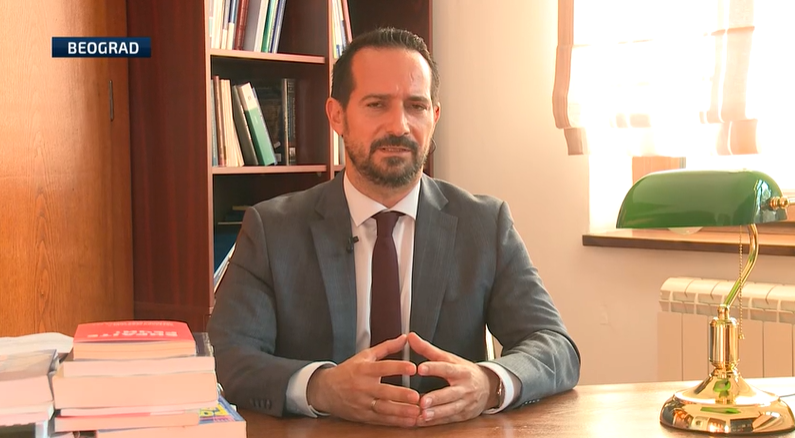
While Serbian President Aleksandar Vučić once again announces elections—this time following the summer period—Tanasije Marinković, a professor at the University of Belgrade Faculty of Law, believes they will not take place this autumn. According to Marinković, the ruling elite is deliberately deepening the rift between state institutions and the citizens.
anasije Marinković, stated in an interview with N1 that the ruling coalition has no intention of resolving the ongoing political crisis, given that it is the primary generator of it. Commenting on President Aleksandar Vučić’s announcements regarding a potential return to the polls after the summer, Marinković expressed skepticism about this scenario, emphasizing that “that man cannot be trusted.”
“The government continues to deepen this crisis and create an even greater chasm between itself and the citizens of Serbia. Since February—specifically since March 1st—we have been waiting for a session of the National Assembly to debate the MPs’ proposal for a vote of no confidence in the government of Đuro Macut. The fact that the Assembly, or rather the majority, refuses to provide a quorum and practically obstructs the organization of that session is just one clear indicator of the regime’s unwillingness to resolve institutional crises,” Marinković pointed out.
Elections Not Expected Until 2027
When asked when he realistically expects elections to be held, Professor Marinković pointed to the regular schedule: April 2027 for the presidential election and December of the same year for the parliamentary elections.
“Everything points to that calendar. However, public discontent and protests will continue into the autumn, meaning Vučić will be forced to call elections only when he absolutely has to—at the very last moment,” he explained.
The Local Level as a Dangerous Precedent: “A Total Defeat for Democracy”
Turning to local political affairs, Marinković specifically highlighted the situation in the municipality of Kula, where an opposition councilor voted for the Serbian Progressive Party (SNS) candidate for municipal president. He emphasized that during the constitution of that local assembly, a serious violation of ballot secrecy had occurred.
- Violation of Secrecy: Members of the ruling majority systematically marked their ballots.
- Legal Consequences: Due to the deliberate violation of voter anonymity, Marinković argues that, from a legal standpoint, the Kula Municipal Assembly has not even been validly constituted.
The professor expressed a justified fear that this mechanism of controlling councilors and voters could become a blueprint for upcoming national elections.
“I fear this will be devastating. If we end up with ballots in general elections that are not anonymous but personalized—because individuals leave specific, pre-arranged marks to identify themselves to monitors—it will mark the total defeat of democracy in Serbia,” Marinković concluded.