The OSCE Office for Democratic Institutions and Human Rights (ODIHR) has recommended deploying a full-scale international election observation mission for Serbia’s upcoming parliamentary elections, citing expectations that the vote will take place in a highly polarized political and social environment.
The recommendation is contained in ODIHR’s Needs Assessment Mission Report following a visit to Belgrade from July 6 to July 10, during which representatives met with Serbian state institutions, election authorities, ruling and opposition parties, media organizations, and civil society groups to assess the pre-election environment.
According to the report, Serbia has adopted several legislative amendments in line with previous ODIHR recommendations. However, the organization concluded that persistent concerns related to media freedom, equal campaign conditions, political polarization, and the practical implementation of electoral reforms warrant the deployment of a comprehensive observation mission.
ODIHR recommended sending a core team of election experts, supported by 32 long-term observers to monitor the campaign across Serbia and 300 short-term observers to oversee voting procedures on election day.
The mission would assess the overall electoral environment, campaign activities, media coverage across traditional and online platforms, and the effectiveness of institutions in identifying and responding to disinformation, misinformation, and potential domestic or foreign interference.
The report warns that Serbia’s elections are expected to unfold amid deep political polarization and a significant lack of trust between key political actors, as well as between the opposition and the country’s election administration.
ODIHR also noted that the country’s political climate continues to be shaped by the mass student-led and civic protests that erupted after the fatal collapse of the canopy at Novi Sad’s railway station on November 1, 2024, an event that intensified political tensions and continues to influence the pre-election atmosphere.
Among the key issues identified for closer monitoring are the implementation of the revised electoral legislation, the work of the election administration, the ongoing audit of the voter register, candidate registration, campaign conduct, campaign financing, media reporting, and election-day procedures.
The report further highlights allegations of vote-buying, the potential misuse of state resources, voter intimidation, and undue pressure on voters as issues requiring particular attention during the observation process.
While acknowledging that Serbia has restored the functionality of the Regulatory Authority for Electronic Media (REM), ODIHR notes continued concerns that television broadcasters with national frequencies display significant bias in favor of the ruling authorities while providing limited access to opposition representatives.
The report also addresses recent changes to Serbia’s electoral rules, including the removal of the previous restriction allowing voters to endorse only one electoral list. While the amendment expands voter choice, ODIHR notes concerns that the new system could facilitate abuse through the creation of so-called “phantom lists.”
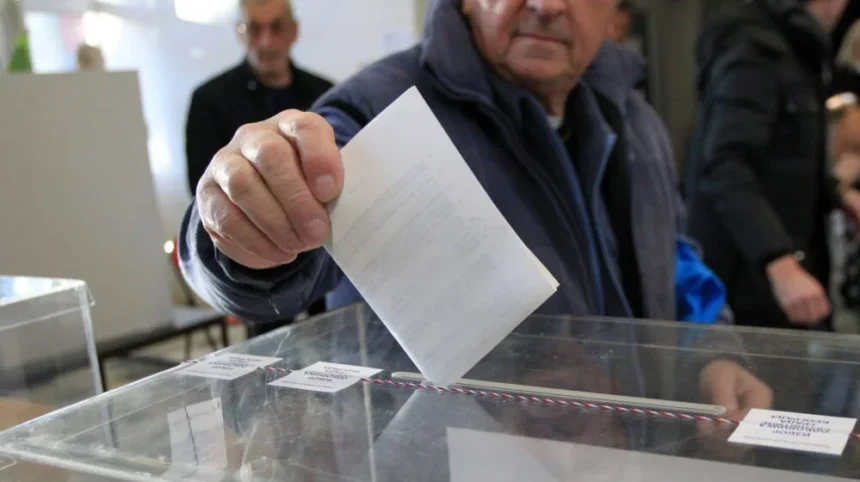
According to the report, Serbia’s Unified Voter Register currently contains 6,439,075 registered voters. Although an independent commission established in 2025 is conducting a long-awaited audit of the voter roll to improve transparency, many stakeholders questioned whether the review would produce meaningful results before the elections.
ODIHR concludes that a robust international observation presence would provide an independent and impartial assessment of the electoral process, help strengthen public confidence, reduce political tensions, and contribute to preventing potential electoral irregularities and election-related violence in Serbia.