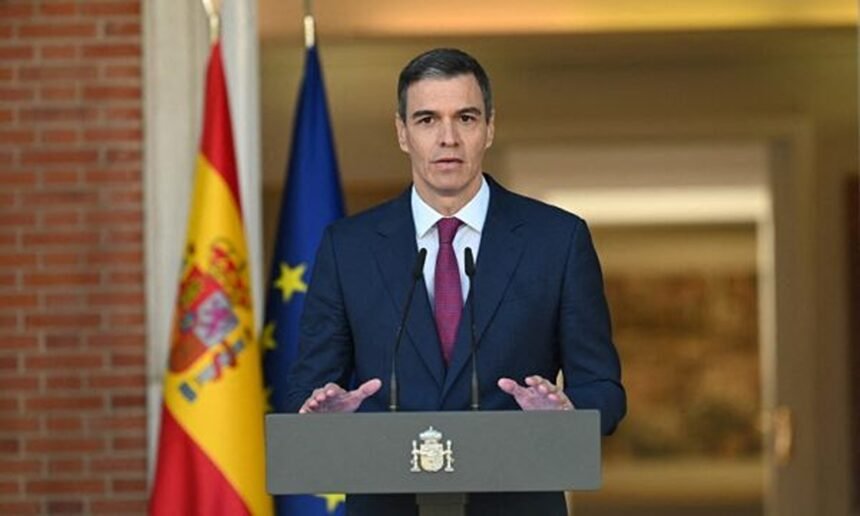
Spain’s Prime Minister Pedro Sánchez has dismissed reports suggesting that the United States is considering punitive measures against NATO allies, including the possible suspension of Spain from NATO.
Speaking during a European Union summit in Cyprus, Sánchez refused to engage in a confrontation with United States over the issue, downplaying claims linked to an alleged internal Pentagon email.
“We don’t work with emails,” Sánchez told reporters. “We work with official documents and established positions, in this case from the U.S. government.”
The reports suggested that the Pentagon is exploring options to penalize NATO members that have not supported American operations in the conflict with Iran. Spain is among the countries mentioned, having refused to grant U.S. forces access to its bases or airspace for such operations. Madrid argues that U.S. and Israeli actions against Iran conflict with international law.
Sánchez reiterated Spain’s stance: “Absolute cooperation with allies, but always within the framework of international legality.”
Despite the speculation, NATO’s founding treaty does not include provisions for suspending or expelling member states. The alliance operates by consensus, and while countries may voluntarily withdraw, there is no formal mechanism to remove a member.
Tensions have been rising as Donald Trump has criticized several NATO allies for what he sees as insufficient support in securing the Strait of Hormuz and backing U.S. actions against Iran. He has even questioned the broader purpose of U.S. membership in the alliance.
Meanwhile, Kaja Kallas expressed surprise at the U.S. criticism, noting that countries like United Kingdom and France are already leading efforts to safeguard maritime trade routes in the region once the conflict subsides.
The situation underscores growing divisions within Western alliances over strategy, legality, and military engagement in the Middle East.