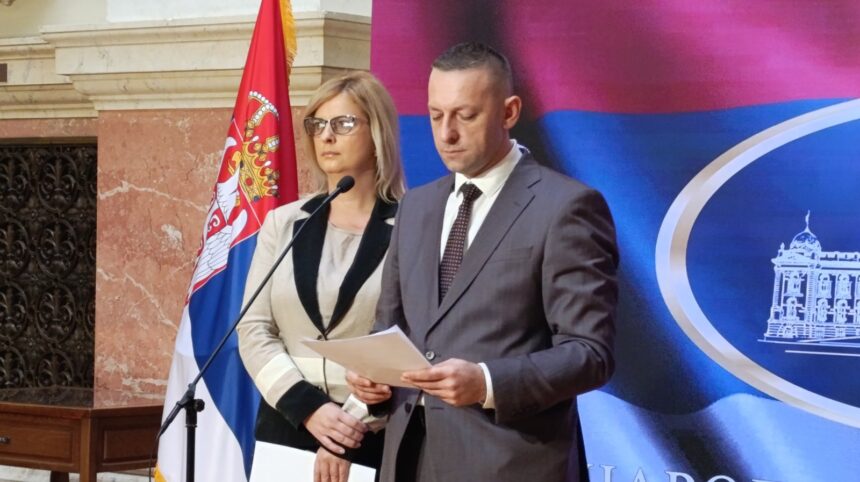
he Party of Democratic Action (SDA) of Sandžak announced today, May 14, 2026, that it has sent formal letters to several major international organizations regarding what it describes as a “campaign of lynching” and “continuous pressure” against its members of parliament.
The letters were addressed to the OSCE Mission, the Delegation of the European Union, the United Nations Office, and the Council of Europe in Serbia.
The Incident in the National Assembly
According to the party’s statement, the situation reached a critical point during the National Assembly session on May 12, 2026.
- Targeted Attacks: MP Ahmedin Škrijelj was reportedly subjected to “brutal” verbal attacks and hate speech from representatives of the ruling regime.
- The Catalyst: The party claims the aggressive rhetoric and threats followed Škrijelj’s “dignified and argument-based response” to ongoing attempts by the government to discredit the SDA Sandžak.
- Atmosphere of Fear: The SDA Sandžak highlighted that these are not isolated incidents but part of a systematic effort to silence MPs who advocate for the interests of the Bosniak people and the Sandžak region.
Failure of Domestic Institutions
A core complaint in the party’s appeal to international bodies is the perceived inaction of Serbian state institutions.
“The fact that such threats and pressures are repeated, while an adequate reaction from the competent institutions is missing, is particularly concerning,” the statement read.
Appeal for International Intervention
The SDA Sandžak emphasized that timely international reaction is “of crucial importance” to:
- Prevent further escalation of tensions.
- Protect the fundamental democratic rights and safety of MPs and their families.
- Ensure the security of political representatives from minority communities.
Commitment to Political Struggle
Despite the threats, the party vowed to continue its political battle through institutional channels. They stated they would speak “even more decisively” about perceived injustice, discrimination, and the systemic treatment of Bosniaks in Sandžak by the current regime.
This move marks a significant escalation in the political friction between regional minority parties and the central government in Belgrade, drawing the attention of the international diplomatic community to the parliamentary climate in Serbia.