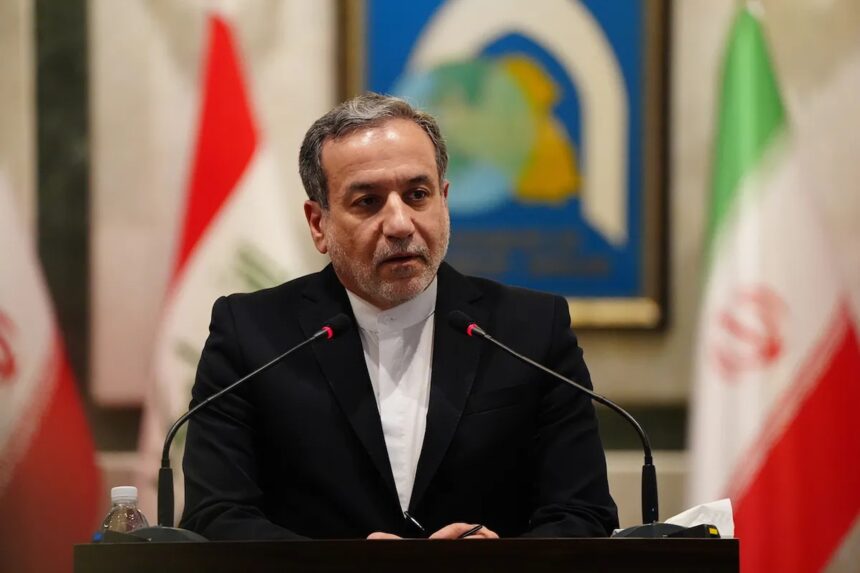
Iranian Foreign Minister Abbas Araghchi has issued a sharp condemnation of United States foreign policy, accusing the Trump administration of pursuing a “reckless military adventure” at a moment when diplomatic solutions remain on the table.
The statement, released on May 8, 2026, follows a series of high-stakes naval engagements in the Strait of Hormuz and the Gulf of Oman, where U.S. and Iranian forces have engaged in direct exchanges of fire.
The “Swamp” of Escalation
In a post on the social media platform X, Araghchi asserted that Iranians “will never bow to pressure.” He questioned the strategic logic behind the recent American naval maneuvers, asking if the escalation was a “tough pressure tactic” or the result of faulty intelligence “misleading [President Trump] into another swamp.”
Despite the hostilities, President Donald Trump maintained that a fragile ceasefire—intended to facilitate talks to end the broader conflict that began in February—remains “intact.”
Naval Confrontations and Blockades
The situation on the water has reached a critical flashpoint. According to U.S. Central Command (CENTCOM):
- Precision Strikes: U.S. forces utilized precision munitions to disable two empty Iranian-flagged oil tankers attempting to breach the ongoing U.S. naval blockade in the Gulf of Oman.
- Disabled Vessels: The strikes targeted the ships’ smokestacks to render them immobile without sinking them, enforcing the maritime embargo on Iranian ports.
- Strait of Hormuz Skirmish: CENTCOM accused Iran of launching an “unprovoked attack” involving missiles, drones, and fast-attack craft against three U.S. warships earlier this week.
Iran’s Counterclaims: Tehran’s military command alleged that the U.S. targeted a civilian Iranian oil tanker and conducted airstrikes on several coastal areas. Local officials in the Hormozgan province reported that at least one cargo ship was set ablaze near Minab, with ten sailors hospitalized and several others missing.
Global Economic Stakes: The Oil Chokepoint
The conflict centers on the Strait of Hormuz, the world’s most important oil transit point. Approximately 20% of the world’s petroleum and liquefied natural gas (LNG) passes through this narrow waterway.
- Global Prices: Continuous disruptions and Iran’s intermittent control of the Strait have caused global energy prices to surge.
- Stranded Vessels: Earlier this week, President Trump launched and then paused an operation to assist roughly 2,000 ships that have been trapped in the zone since February.
The Diplomatic Outlook
U.S. Secretary of State Marco Rubio, speaking during a visit to Italy, indicated that the U.S. expects a formal response from Iran regarding American proposals on Friday. “I hope it is a serious offer, I really do,” Rubio stated, signaling that the window for a negotiated settlement remains narrow.
The “maximum pressure” campaign via naval blockade remains the primary U.S. lever to force Tehran into accepting Washington’s terms for a new regional security framework. Tehran, however, views the blockade as an act of war, setting the stage for a potentially decisive confrontation in the coming days.