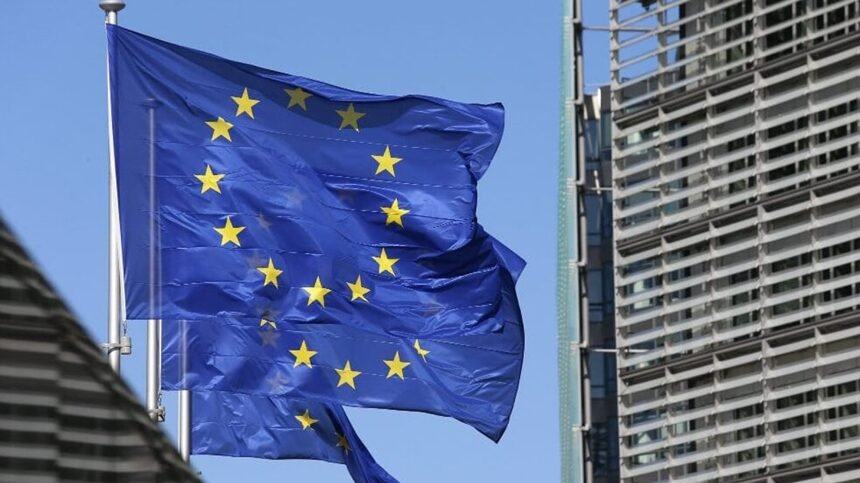
The European Union has sent a blunt message from the G20 meeting in Asheville: this is not the moment to pretend that Russia is just another normal partner.
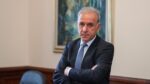
EU Economic and Financial Affairs Commissioner Valdis Dombrovskis criticized the presence of a Russian official at the US-hosted G20 meeting, arguing that Russia’s participation should not be allowed to become a step toward normalizing relations while its war against Ukraine continues.
His message was direct: Europe cannot casually sit across the table from representatives of a regime that is still waging war and killing civilians.
And that contradiction is becoming increasingly difficult to ignore.
You Cannot Normalize War
The G20 exists to bring together the world’s major economies to address global economic challenges.
But Russia’s presence inevitably raises a much larger question: what does international cooperation mean when one of the participants is simultaneously engaged in a war that has devastated another sovereign European country?
For the EU, the answer should be clear.
Economic dialogue cannot become a shortcut to political rehabilitation.
Russia cannot bomb Ukrainian cities on one day and return to business-as-usual international diplomacy on the next.
If the international community normalizes that behavior, it risks sending a dangerous message: that even a major war can eventually become just another diplomatic inconvenience.
Ukraine Remains the Priority
Dombrovskis also used the meeting to push for greater financial support for Ukraine.
That matters because Ukraine’s ability to resist Russia depends not only on weapons and soldiers, but also on economic resilience.
Keeping Ukraine’s economy functioning means helping the country maintain essential services, rebuild infrastructure and sustain its capacity to defend itself.
The EU’s position therefore reflects a broader reality: support for Ukraine is not charity. It is part of Europe’s security strategy.
Russia Wants Normalization. Europe Should Resist It.
Moscow has consistently sought to present the war as something the world should simply learn to live with.
That is precisely the trap Europe must avoid.
The return of Russian officials to prestigious international forums can easily be portrayed by Moscow as evidence that isolation is ending and that Russia’s actions have become politically acceptable.
They have not.
Russia’s participation in international institutions does not erase the war.
Diplomatic handshakes do not erase destroyed cities.
Economic meetings do not erase civilian deaths.
And a seat at the table should not automatically become a clean bill of political legitimacy.
The G20 Should Not Become a Rehabilitation Platform
The issue is ultimately larger than one Russian representative attending one meeting.
It is about the precedent.
If Russia can continue its war while gradually regaining access to international forums without meaningful consequences, then the principle of accountability becomes dangerously weak.
The EU’s message should therefore remain consistent:
There can be diplomacy without normalization. There can be dialogue without rehabilitation. And there can be international institutions without pretending that nothing happened.
Until Russia ends its aggression and respects Ukraine’s sovereignty, Europe has every reason to remain deeply skeptical of any attempt to restore business as usual.
Because peace is not the same thing as normalization.
And silence is not neutrality.