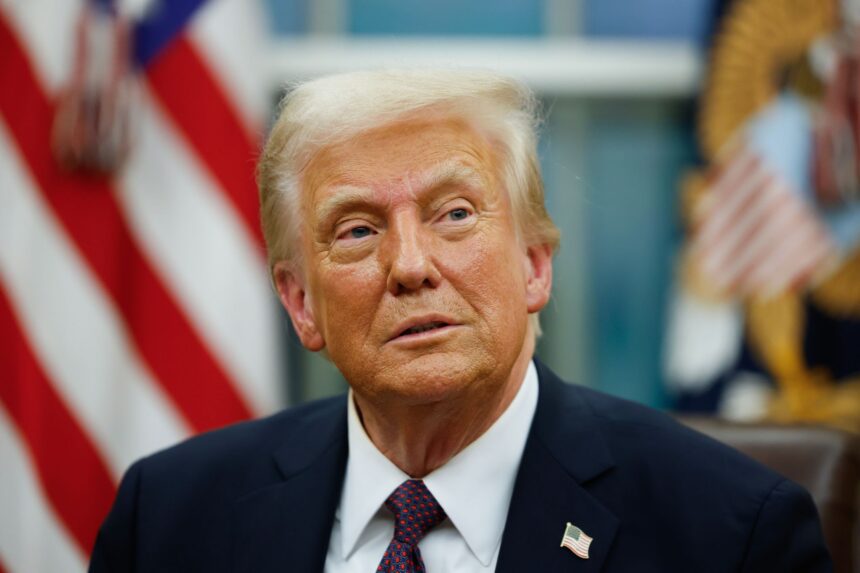
**U.S. President Donald Trump has announced that he is canceling a previously anticipated second wave of military attacks against Venezuela, citing improved cooperation from the Venezuelan government and recent developments aimed at reducing tensions.
In a statement on January 9, 2026, Trump said that Caracas has taken steps such as releasing a large number of political prisoners as a gesture of “seeking peace.” He described this as a “very important and smart gesture” that helped pave the way for improved relations.
Cooperation and Continued Military Presence
While the second planned wave of strikes has been called off, Trump noted that U.S. military ships and forces will remain in the region for safety and security purposes. He also highlighted ongoing cooperation, particularly in areas like the modernization and rebuilding of Venezuela’s oil and gas infrastructure.
According to reports, Trump plans to meet with major U.S. oil executives at the White House to discuss potential investment — with estimates of up to $100 billion in Venezuelan energy sector projects.
Background: U.S. Military Action and Political Shifts
The decision comes in the wake of a U.S. military operation that captured Venezuelan President Nicolás Maduro and his wife, extraditing them to New York to face charges — a dramatic escalation that drew widespread international attention.
The U.S. Senate has also taken steps to limit further military actions without congressional approval by advancing a War Powers Resolution to constrain Trump’s authority for foreign military engagements, including in Venezuela.
International and Domestic Reaction
Trump’s decision to cancel additional military strikes reflects an apparent shift toward diplomacy and economic engagement, even as U.S.–Venezuela relations remain highly controversial. Critics have raised legal and geopolitical concerns about earlier military actions, and the situation continues to evolve quickly.