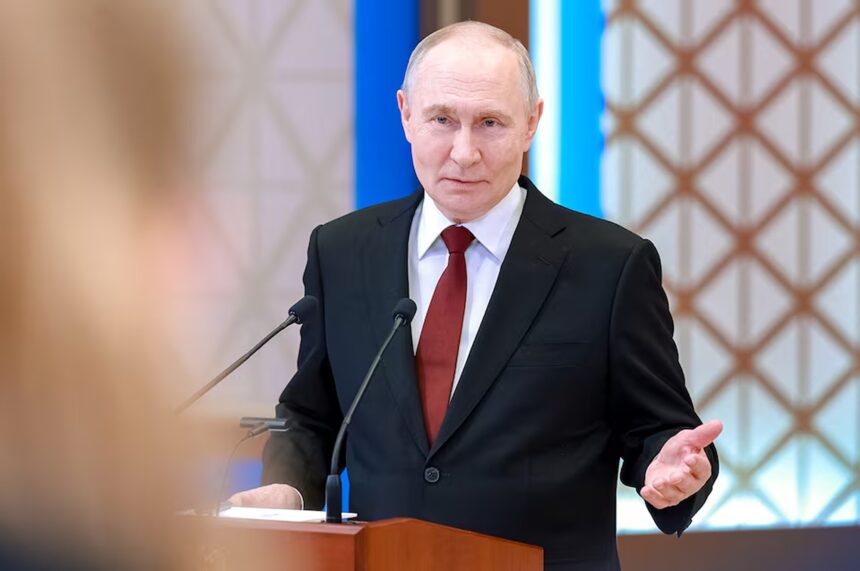
U.S. intelligence assessments indicate that Russian President Vladimir Putin may be increasingly willing to authorize provocative actions that could extend into the territory of NATO member states.
According to U.S. officials, these actions could include hybrid operations, cyberattacks, and other forms of interference that Russia could deny, without escalating into direct war.
U.S. assessments indicate that Putin’s attitude toward risk has changed compared with several months ago. The potential objective would not necessarily be to launch a broader conflict, but rather to test NATO’s unity and the Trump administration’s willingness to respond in the event of an attack on a member state.
U.S. officials say that an explosive-laden drone found earlier this week at an airport in Leipzig, Germany, is suspected of having Russian origins.
Concerns have also increased following a series of other incidents across Europe. These include alleged incursions by Russian drones into Romanian airspace, a Russian missile that crossed into Polish territory last month, as well as a rise in suspected acts of sabotage, cyberattacks, and other hybrid operations.
NATO Secretary General Mark Rutte and other European leaders have long warned that Russia is expanding its use of hybrid tactics.
Meanwhile, Russia is suffering heavy losses in the war in Ukraine. CIA Director John Ratcliffe said last month that U.S. assessments of Russian casualties are consistent with data reported from the battlefield.
According to U.S. officials, Russia is losing approximately 30,000 troops per month, while the number of recruits is failing to compensate for these losses.
U.S. diplomatic efforts to end the war in Ukraine have stalled, and there is currently no clear path toward the resumption of negotiations.
Under Article 5 of the NATO Treaty, an armed attack against one member is considered an attack against all members of the alliance, and member states commit to assisting the country under attack.
U.S. President Donald Trump has previously expressed doubts about how Article 5 would be implemented, although on other occasions he has stated that the United States would defend NATO member states.
The Trump administration has also called on European countries to take greater responsibility for their own defense. In this context, the possibility of reducing U.S. troop levels in Germany has been discussed, while plans to cancel a military deployment in Poland were withdrawn earlier this year.