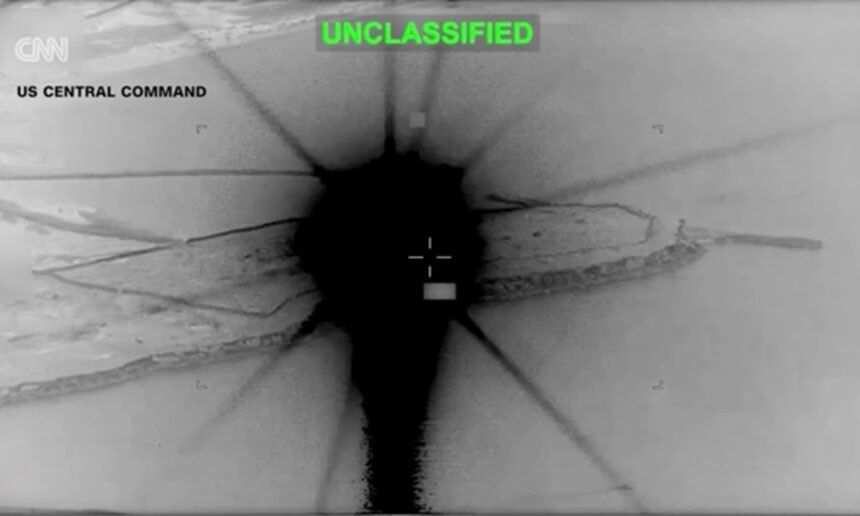
The United States Central Command announced that the United States carried out a new wave of strikes against Iran aimed at keeping the Strait of Hormuz open to international shipping, prompting Iranian retaliatory attacks on Kuwait and Bahrain.
According to CENTCOM, the strikes were launched in response to Tuesday’s attacks on three commercial vessels transiting the Strait of Hormuz.
“U.S. Central Command forces have begun conducting additional strikes against Iran to further degrade its ability to threaten freedom of navigation in the Strait of Hormuz,” CENTCOM said.
The U.S. military added that it holds Iran responsible for the recent attacks on commercial ships and civilian crews operating along the vital international shipping route.
The strikes reportedly targeted several locations along Iran’s southern coast, causing power outages in multiple areas.
Iran responded by launching missile and drone attacks against Kuwait and Bahrain, both of which host U.S. military bases. It marked the second consecutive day of Iranian strikes against the two Gulf states.
Kuwait’s Ministry of Defense said its air defenses intercepted incoming missiles and drones, while Qatar briefly issued a heightened security alert before later announcing that the threat had passed.
U.S. President Donald Trump wrote on Truth Social:
“This is retaliation for yesterday’s bombing of ships by Iran. If it happens again, the consequences will be far more severe.”
Iranian Parliament Speaker Mohammad Bagher Ghalibaf warned that continued U.S. military action would trigger further retaliation.
“The United States still has not understood that threats and breaking its commitments no longer go unanswered. Let me be clear: If you strike, you will be struck.”
He also said the Strait of Hormuz would only be reopened “under Iran’s terms, not through U.S. threats.”
The latest exchange of attacks has cast doubt on the future of the temporary ceasefire memorandum signed on June 17.
Asked whether the agreement was effectively over, Trump replied:
“For me, I think it’s over. I don’t want to deal with them anymore.”
However, he later added that he does not expect a full-scale war to resume and believes that any renewed confrontation would end quickly.
The renewed escalation also pushed global oil prices higher, with Brent crude rising by around 1% to $78.80 per barrel, although prices remained well below the highs recorded earlier in the conflict.