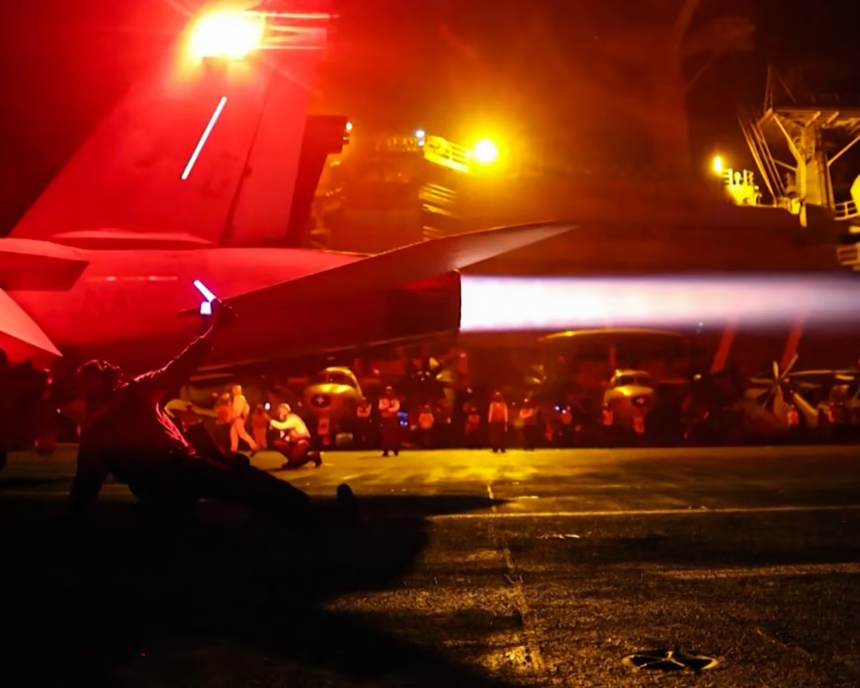
Tensions in the Middle East have escalated into a near-full-scale war following the ninth consecutive night of U.S. air strikes against Iran. The military offensive comes in the wake of mounting American casualties, deteriorating maritime security in the Strait of Hormuz, and the collapse of last month’s temporary ceasefire agreement.
Mounting U.S. Casualties and Direct Retaliation
The U.S. military confirmed the death of an American service member in northern Iraq during a controlled detonation of unexploded ordnance from a downed Iranian attack drone.
- Casualty Toll: This marks the third U.S. fatality in recent days following an Iranian strike on a Jordanian airbase that killed two service members and left another missing. A total of 17 U.S. service members have been killed since the onset of hostilities.
- Trump’s Statement: Speaking upon his return to Washington following the World Cup final, President Donald Trump addressed the escalating strikes:
Donald Trump: “We hit them very hard again tonight… We did this in honor of, probably three, probably three great patriots.”
Strait of Hormuz Bottleneck & Surge in Global Oil Prices
Maritime transit through the crucial choke-point—where a fifth of the world’s pre-war oil supply previously flowed—has largely come to a standstill following intense military friction:
- Maritime Incidents: A vessel caught fire near the coast of Oman within the southern transit corridor. Iran’s Islamic Revolutionary Guard Corps (IRGC) claimed to have detonated two oil tankers attempting the passage, though independent verification remains pending.
- U.S. Blockade: Following the implementation of a naval blockade on Iranian ports last week, U.S. forces have redirected six vessels and disabled another.
- Market Impact: Global oil markets reacted swiftly, with Brent crude surging by 2.72% to $90.50 per barrel—its highest point since June.
Wider Regional Escalation
| Region | Recent Conflict Developments |
| Bahrain (Manama) | Air raid sirens sounded as the U.S. Embassy issued warnings regarding potential targeted Iranian attacks in central Manama. |
| Syria (Al-Tanf) | The IRGC claimed a surprise strike against an enemy command center in the Al-Tanf region. |
| Israel | Defense Minister Israel Katz warned of maximum force retaliatory strikes if Iranian missiles target Israeli soil. The U.S. is deploying dozens of additional refueling aircraft to support force positioning in Israel. |
Diplomatic Breakdown & Strategic Shift
The 60-day temporary truce designed to negotiate a permanent end to the conflict and address Iran’s nuclear program has effectively unraveled halfway through its timeline. Iranian negotiators formally suspended their commitments under the deal, accusing Washington of violating the agreement.
In response to Supreme Leader Mojtaba Khamenei’s threats of “unforgettable lessons,” U.S. Energy Secretary Chris Wright outlined Washington’s shifting strategic objectives:
Chris Wright: “We took a pause to try to reach an agreement with the Iranian people to allow oil to flow without attacking them. They have shown they are unwilling to do that, and we have shifted posture. Now, what we are doing is ensuring that oil, gas, and other products can flow through the Strait of Hormuz with or without Iran’s cooperation.”