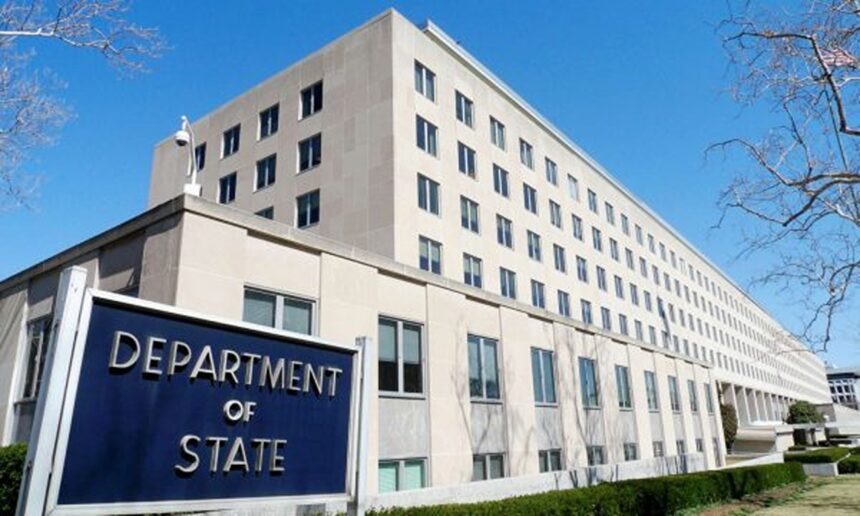
The U.S. Department of State’s 2026 Investment Climate Statement on Albania highlights strong growth in foreign direct investment while warning that corruption, informality, weak competition, property disputes and money laundering continue to pose challenges for businesses and investors.
The report says Albania has made progress in attracting foreign capital, but investors continue to report concerns over transparency, contract enforcement, public procurement and the business environment. The State Department has previously identified corruption, distorted competition, the informal economy, money laundering and labor shortages as persistent obstacles to investment in Albania.
Corruption and Informal Economy Remain Key Concerns
According to the report, investors identify corruption in public administration, the judiciary, public procurement and the media among the principal problems affecting the business climate.
The State Department also notes concerns over the impact of illicit proceeds from drug trafficking, smuggling, tax evasion and corruption on market competition. Investors have reported concerns about possible extortion involving public administration, media and criminal groups, although the report does not identify specific individuals or cases in connection with these concerns.
The report also points to Albania’s large informal economy and labor shortages, with the emigration of young and skilled workers continuing to affect businesses and investment prospects.
Strategic Investments and PPPs
The report raises concerns about the implementation of Albania’s strategic investment framework. It says relatively few foreign investors have benefited from strategic-investor status, while most approved projects have involved domestic companies, particularly in the tourism sector.
The State Department also identifies limited competition, weak cost-benefit analysis and insufficient technical expertise as continuing concerns surrounding public-private partnerships (PPPs). It says the use of PPP contracts has reduced opportunities for competition, including for foreign investors in infrastructure and other sectors.
Property Rights Remain a Challenge
Property rights and land registration continue to be significant concerns for investors, particularly because obtaining clear and secure titles can be difficult.
The State Department says overlapping property titles remain a widespread problem and notes concerns over the accuracy and completeness of property records. Disputes over ownership and registration can create additional risks for investment, particularly in the real estate and tourism sectors.
State-Owned Enterprises and Transparency
The report also discusses Albania’s state-owned enterprises and cites OECD data indicating that the country has dozens of companies that are fully or predominantly state-owned.
It raises concerns about transparency surrounding the state-owned sector and says limited information can make it more difficult to assess the companies’ assets, revenues and employment levels. The report also notes concerns regarding the independence of boards and the potential influence of political decision-making over appointments.
Money Laundering and Judicial Reform
Albania was removed from the Financial Action Task Force’s (FATF) grey list in 2023 following improvements in its technical compliance with anti-money-laundering standards. Nevertheless, the State Department continues to identify money laundering as a significant concern for the country’s business environment.
At the same time, the report recognizes progress by Albania’s Special Prosecution Office (SPAK) and the National Bureau of Investigation (BKH) in investigating and prosecuting corruption and organized crime, including cases involving senior officials.
The State Department says the ongoing implementation of judicial reform, supported by the United States and European Union, is expected to contribute to improvements in the rule of law and the investment climate.
Foreign Investment Continues to Grow
Despite the challenges, foreign direct investment in Albania has continued to increase.
According to the figures cited in the report, FDI reached approximately $1.84 billion in 2025, compared with around $1.72 billion in 2024.
Real estate accounted for the largest share of investment flows, followed by financial services, extractive industries and trade.
The State Department has previously noted that Albania attracted almost $1.6 billion in FDI in 2023, with investment concentrated in real estate, extractive industries, banking and insurance, and energy.
Overall, the U.S. assessment presents a mixed picture of Albania’s investment climate: the country continues to attract increasing amounts of foreign capital, while investors still face challenges related to corruption, property rights, informal economic activity, competition, transparency, contract enforcement and labor shortages.