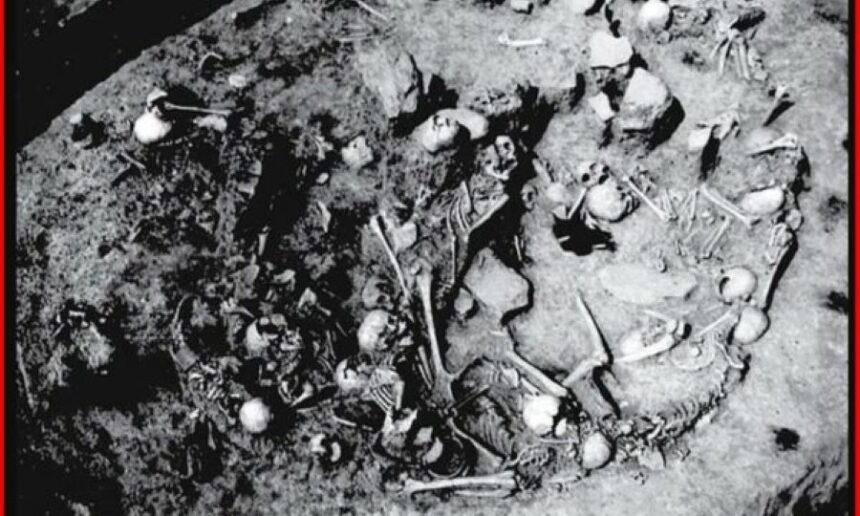
Archaeologists have uncovered the remains of a mass killing in Gomolava, Serbia, dating back to the 9th century BCE, revealing that 77 individuals—mostly women and children—were systematically murdered.
Details of the Massacre
- Victims:
- 40 children (ages 1–12)
- 12 teenagers
- 24 adults, 87% of whom were women
- Only one infant male
- Injuries:
Analyses show intentional, violent, often fatal blows, mainly to the head, caused by weapons such as war clubs, battle hammers, and sling projectiles. Many attacks were not face-to-face, with some suggesting mounted assailants. Defensive wounds indicate some victims tried to fight for their lives. - Origins:
Genetic studies suggest the victims came from different regions and had varied diets, indicating they were not all closely related.
Context and Significance
Researchers believe the massacre occurred during a period of social instability, when communities were establishing new fortified settlements. This systematic violence likely reflects regional conflict and a struggle for power among emerging communities.
Ritual Burial Evidence
Unlike typical mass graves of the era, the Gomolava site shows deliberate funerary practices:
- Victims were buried with personal belongings, jewelry, ceramic vessels, and bronze ornaments
- Animal remains, including a calf skeleton, suggest ritual sacrifices
- Burned seeds and damaged millstones indicate careful preparation of the burial site
Researchers interpret this as a planned act combining murder and ritual, designed to reinforce power structures and control over neighboring communities.
Historical Implications
The discovery sheds light on:
- Inter-regional conflicts and aggressive power shifts
- Gendered violence, with women disproportionately targeted
- The evolution of ritualized violence and burial customs
- Broader social and political changes in prehistoric Southeastern Europe
According to scientists, understanding these victims is key to tracing the origins of organized violence, social control, and community conflict in the ancient Balkans.