While the government pretends to listen to international criticism of its judicial reforms, the Venice Commission’s assessments, and the Constitutional Court, it is simultaneously working rapidly to ensure that the prosecution becomes its secure stronghold. The Serbian Intelligence Agency (BIA) is there to facilitate this.
It seems that BIA’s additional role is not just monitoring regime critics, eavesdropping on students, and leaking personal details to tabloid media, but also actively influencing the High Council of the Judiciary elections. After “friendly” discussions, all chief prosecutors were instructed by BIA to hold a council and convey a message suggesting support for candidates who would ensure sensitive cases remain shelved and allow the effective paralysis of the Organized Crime Prosecution.
The government’s double game—pretending to heed international advice while consolidating control over the judiciary—relies heavily on BIA.
Ahead of elections, Serbia is undergoing a new media restructuring, with mass acquisitions or creation of portals, websites, and local TV stations to ensure that all outlets follow directives from the top. Naturally, this also provides plenty of additional work for BIA.
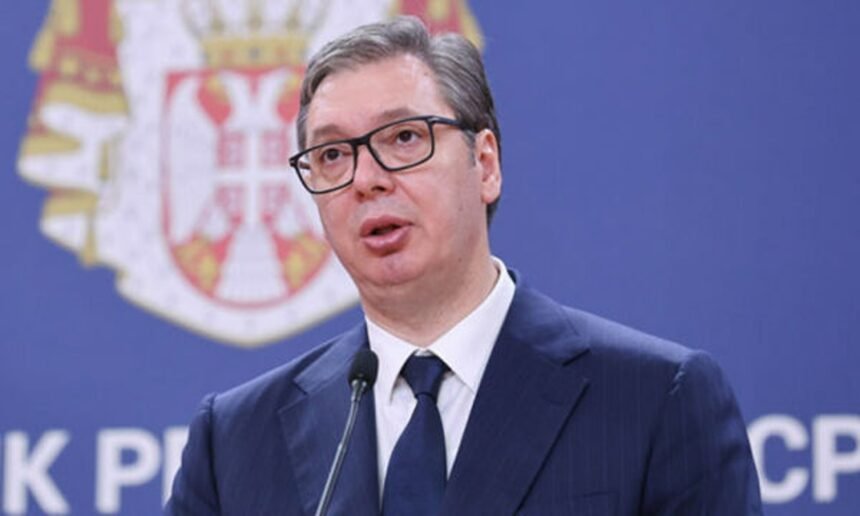
Recent months have signaled that the double-faced policy of the Serbian president is increasingly visible internationally. EU ambassadors recently held an emergency debate on Serbia at Germany’s request, with several countries suggesting the suspension of funds from the EU Growth Plan if the new judicial laws remain in force. The use of European money requires a functioning democracy and rule of law—conditions clearly lacking in Serbia.
Michael Gahler, a CDU MEP, highlighted the president’s Janus-faced approach: “We see a friendly face and are told Serbia is on the EU path, reforms are happening—but domestically, repression prevails. Media loyal to him fuel anti-European sentiment.” This division of labor is deliberate.
Professional propaganda architecture maintains the appearance of a moderate leader abroad while domestically sustaining radical networks, manipulating emotions, and creating constant feelings of threat. Public opinion is managed through repeated cycles: crisis production, leader heroization, and new crises.
The result: 834 attacks on independent media in six months, while regime-controlled outlets demonize critics. As elections approach, the ongoing media restructuring and BIA involvement ensure that all media follow the government’s agenda, while the president presents a compliant, respectful image to Europe, confident he still has leverage to trade.