The American media giant Fox News has reported that Kosovo is facing a constitutional crisis after the deadline to elect a new president passed without success.
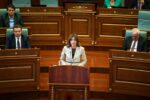
According to the report, President Vjosa Osmani dissolved parliament and called early elections after the latest attempt to elect a head of state failed due to a lack of quorum in the Assembly. Osmani stated that in a complex geopolitical situation, it is important for the electoral process to be concluded as soon as possible.
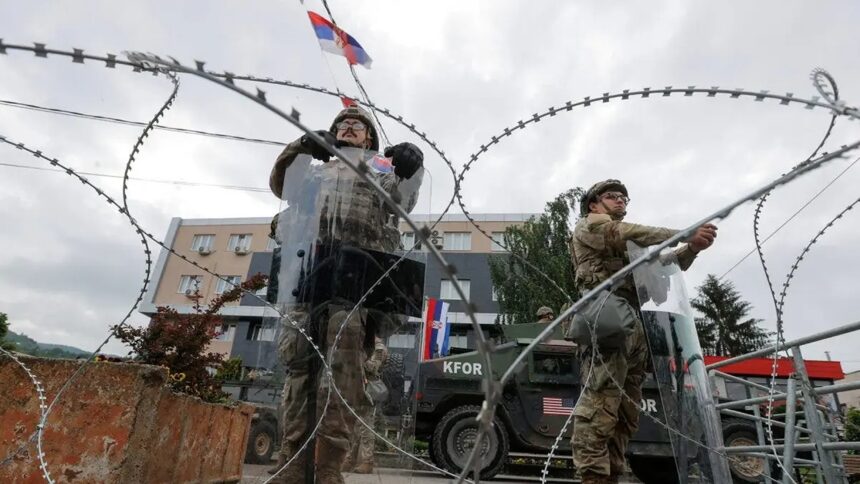
According to Fox News, the developments come at a time when the peacekeeping mission of the North Atlantic Treaty Organization in Kosovo — the Kosovo Force — remains deployed in the country, where around 600 U.S. troops are currently stationed.
The article also highlights that the ruling Vetëvendosje Movement party of Prime Minister Albin Kurti won the most recent elections but failed to secure opposition support to elect a president. The latest vote failed after opposition MPs boycotted the session, opposing the candidacy of Foreign Minister Glauk Konjufca. According to Fox News, opposition leader Ramush Haradinaj suggested that new elections could be held as early as April 5.
The Balkan nation of Kosovo is facing a constitutional crisis after the deadline to elect a new head of state passed. President Vjosa Osmani, described as an ally of U.S. President Donald Trump, dissolved parliament and called for early elections.
With conflicts erupting across the globe and pressure on the NATO contingent stationed in the Western Balkan country to maintain peace, Osmani told reporters that “precisely because the geopolitical situation is so complex, it is important for this electoral process that is approaching to be concluded. It is very difficult now to imagine what will happen next.”
Trump recently praised the Kosovo president for the “excellent work” she is doing in her country during a speech in February. Osmani accepted an invitation from Trump in January to join the Peace Board and has pledged resources to the International Stabilization Force for Gaza.
Kosovo may also face another possible internal shift that could influence Osmani’s position. There have been discussions about a possible reduction or reorganization of NATO’s international peacekeeping mission in Kosovo, KFOR, which has been in place since 1999 to stabilize the country after the Balkan war.
The commander of the peacekeeping force, Major General Özkan Ulutaş, said in February that the United States does not plan to reduce its troop numbers in Kosovo. Around 600 American troops are currently deployed in the country.
Since Kosovo declared independence from Serbia in 2008, tensions between the two countries have remained high.
Former Albanian prime minister Pandeli Majko told Fox News Digital that “Kosovo needs governance and then a compromise to elect a president.” He added that he hopes the Constitutional Court of Kosovo will provide a solution.
Kosovo’s parliament has been locked in a political deadlock for more than a year. Elections in February 2025 failed to result in the formation of a government. Early elections in December resulted in a victory for the Vetëvendosje party of Prime Minister Albin Kurti, but the party failed to secure enough opposition support to elect a president.
The latest vote failed because the session did not reach the required quorum. Opposition members boycotted the vote because they did not support Kurti’s candidate, Foreign Minister Glauk Konjufca.
President Osmani met with opposition party leaders on Friday, a meeting that Prime Minister Kurti chose not to attend. Kurti stated that “there must be a failure to elect a president in the third round before parliament can be dissolved and new elections called.”
Kurti’s party has appealed to the Constitutional Court of Kosovo for a review of the constitutionality of the electoral process.
New elections could be held as early as April 5, according to opposition leader Ramush Haradinaj.
Pandeli Majko said he does not see the debate between parties as the main issue, explaining that their ranking in elections would likely not change even if they were held again. According to him, the idea of early elections represents an exhausting political crisis that does not produce a solution.