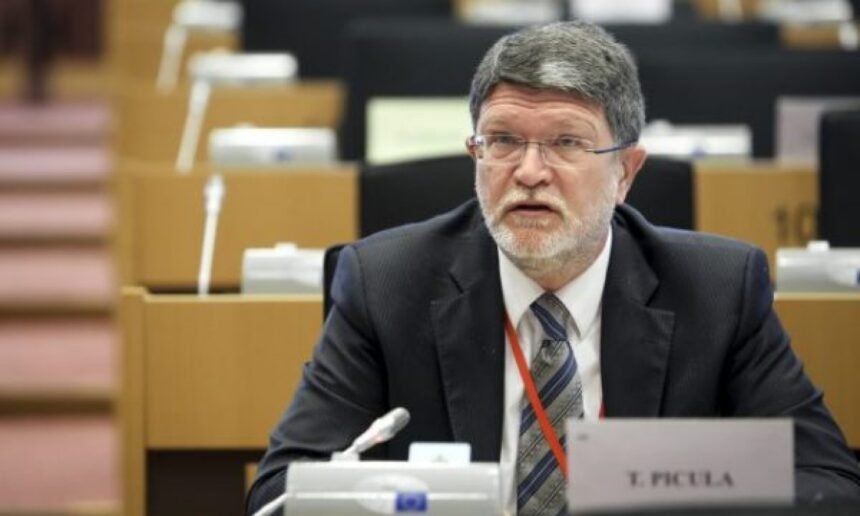
In a blunt assessment of Serbia’s political trajectory, the European Parliament’s Rapporteur for Serbia, Tonino Picula, has identified the regime of President Aleksandar Vučić as the primary catalyst for instability both within Serbia and across the Western Balkans. Speaking to N1 Croatia on April 24, 2026, Picula called for a fundamental shift in European Union policy, urging Brussels to cease its “schizophrenic” relationship with Belgrade.
Picula’s remarks reflect a growing consensus in the European Parliament that the era of “stabilocracy”—sacrificing democratic values for regional calm—is no longer viable.
Repression and State Capture
Picula warned that the internal situation in Serbia is rapidly deteriorating as the regime tightens its grip on the state’s pillars of power. He noted a systematic effort to install “extremely loyal” individuals at the highest levels of the media, military, and police.
“The internal circumstances in Serbia are getting worse because the regime is increasing repression,” Picula stated. “Vučić is in a schizophrenic situation where he asks for money from the European Union while simultaneously demonizing it. Brussels must stop this and change both its narrative and its policy of appeasing Vučić.”
Double Standards for Autocrats
The Rapporteur criticized the EU’s inconsistent approach toward autocratic leaders, drawing a sharp comparison between the West’s reaction to Russia and its handling of Serbia.
- Selective Condemnation: Picula argued that the EU cannot have “several yardsticks” for dictators. While the EU was quick to condemn Putin over Ukraine, he suggested it has remained “softer” on leaders like Vučić and Israeli Prime Minister Netanyahu.
- The Accession Paradox: He emphasized that because Serbia is a candidate country negotiating for membership, the standards for the rule of law and democratic conduct must be strictly enforced, not diluted for geopolitical convenience.
A Climate of Uncertainty
As Serbia moves toward a period of heightened political tension, Picula pointed out that the uncertainty regarding future elections is a major red flag for European observers.
- Opaque Elections: With no clear timeline or framework for upcoming votes, Picula suggested that the regime is intentionally maintaining a state of flux to disadvantage the opposition.
- Fading Pressure? While the intense international pressure seen during last year’s protests may appear to have waned, Picula warned that this impression might be “deceiving.” He hinted that the “question marks” regarding Serbia’s EU path are only growing larger.
Key Concerns Raised by Tonino Picula (April 2026):
| Issue | Description | Strategic Risk |
| Institutional Capture | Purging experts for SNS loyalists in security sectors. | Collapse of state neutrality and public safety. |
| Media Repression | Tightening control over the narrative via loyalist editors. | Eradication of pluralism and fair election conditions. |
| Geopolitical “Double-Play” | Taking EU funds while inciting anti-EU sentiment locally. | Permanent estrangement of the Serbian public from EU values. |
| Regional Instability | Projecting internal autocratic methods into regional disputes. | Stalling the normalization process with Prishtina and Sarajevo. |
Conclusion: The Path Forward
Picula concluded that Serbia’s journey toward the EU remains “strewn with many question marks.” His statement serves as a clear warning to the European Commission: continuing to fund the Vučić regime without demanding a total reversal of its repressive policies will only further destabilize the region. For the European Parliament, the “Mrdić Laws” and the ongoing state capture are no longer domestic Serbian issues—they are direct threats to European security.