An analysis by lawyer Predrag Milovanović, published on March 9, 2026, provides a detailed insight into the political landscape in Serbia and the strategies employed by Aleksandar Vučić as the country approaches the next election cycle. The piece portrays a political system where institutional control, media narratives, and public perception are tightly managed to ensure electoral outcomes favorable to the ruling party.
Key Themes and Observations
- Authoritarian Preparation for Elections
- Vučić is depicted as fully prepared and determined to ensure the elections produce the results he desires.
- The analysis suggests that law enforcement, the judiciary, and the media are structured in a way that maintains the ruling party’s advantage and keeps dissent in check.
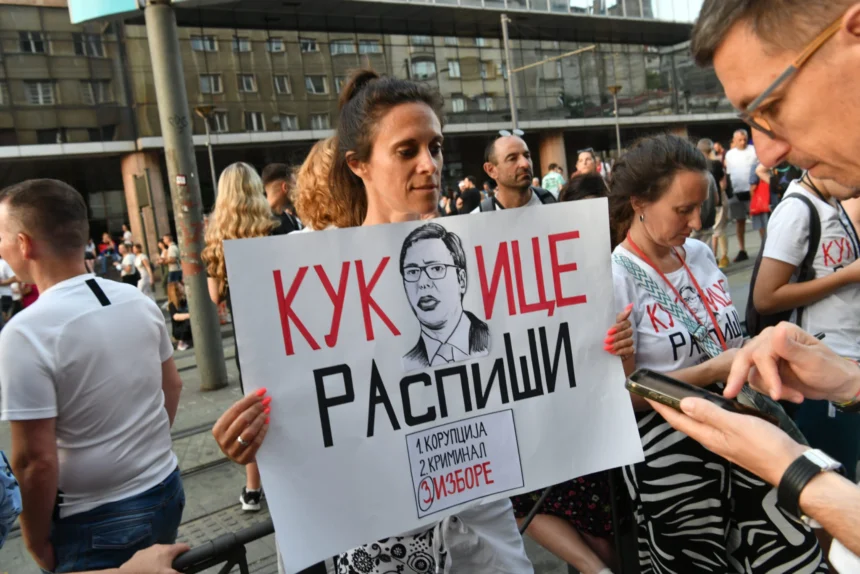
- Protests are described as being shifted from an acute to a chronic state—managed and controlled to prevent them from becoming a threat, while still projecting the image of public engagement.
- Motivations of the Ruling Elite
- A central objective of the administration is to retain control over political and financial resources. The text describes this as not merely winning elections, but preserving “the spoils” and ensuring that key interests remain unchallenged.
- The piece emphasizes that the ruling elite cannot accept any election process that risks outcomes unfavorable to them. Elections are framed as a “do-or-die” scenario—everything is at stake.
- Opposition and Youth Movements
- The opposition is portrayed as weak, fragmented, and largely unable to influence the electoral process meaningfully.
- Students and youth movements, while politically active, are depicted as engaging in informal campaigns lacking clear leadership or strategy, limiting their potential impact.
- The analysis implies that both opposition and civil movements will struggle to overcome systemic structural disadvantages in the political arena.
- Media and Judiciary as Instruments of Control
- According to the analysis, media narratives are carefully crafted to normalize and justify authoritarian actions, influencing public perception and controlling the political discourse.
- The judiciary and prosecution are described as mechanisms to formalize or legitimize actions that serve political ends, ensuring that legal structures do not impede the ruling party’s objectives.
- Strategic Manipulation of Public Perception
- Public protests are managed with “calibrated force,” using police selectively to demonstrate power while maintaining a controlled narrative.
- Media coverage, social commentary, and political analysis are employed in a repetitive, hypnotic cycle designed to create an illusion of public engagement, while the underlying power structure remains intact.
- Elections as a Zero-Sum Game
- Milovanović’s analysis frames the upcoming elections as a high-stakes contest for Vučić—“all or nothing.” Victory must be decisive, as anything less threatens both political control and the personal interests of the ruling elite.
- The text suggests that the political elite has anticipated opposition tactics, prepared its own forces, and solidified loyalty within institutions to ensure compliance.
Broader Implications
This analysis points to a political system where democratic norms are under significant strain. Control over the media, judicial system, and law enforcement, combined with the strategic management of public protests and civil movements, suggests an environment in which electoral outcomes are heavily influenced by state mechanisms rather than fully competitive processes.
- The opposition faces structural obstacles, including weak party infrastructure and limited capacity to mobilize voters effectively.
- Civil society and youth movements may have symbolic visibility but are constrained in their real political impact.
- The international community may observe elections formally, but local mechanisms ensure that outcomes remain heavily favorable to the incumbent leadership.
Questions for Serbian Society
Milovanović leaves open critical questions: How will citizens respond to this tightly controlled political environment? Are institutions prepared to resist authoritarian practices? And, in the long term, how will this dynamic affect Serbia’s democratic development, particularly looking toward the 2027 elections?
The analysis highlights a scenario where elections are not merely a political contest but a strategic battle to maintain power, resources, and influence—an “all or nothing” approach that shapes the behavior of both the state and society.