A controversial narrative that attempts to link NATO’s 1999 intervention in Kosovo to nearly every modern global conflict, reflecting how Aleksandar Vučić continues to frame history through a politically charged lens.
It was March 12, 1999.
Aleksandar Vučić at the time was a young man with radical political beliefs, fascinated by the leader of this movement in Serbia, Vojislav Šešelj.
Both of them were very hostile toward Kosovo Albanians. Also toward Americans and NATO.
At that time, his country called Yugoslavia (which included Serbia and Montenegro) and led by Slobodan Milošević – was being urged by the international community to accept a peace plan to end the war in Kosovo, where Belgrade’s forces were carrying out massacres almost daily against the indigenous Albanian population. Part of this proposal was also the deployment of around 30,000 NATO troops in Kosovo to guarantee peace.
Vučić, who on that March 12 had been in Pristina as Minister of Information of the Serbian (Yugoslav) government, said that his country rejected, without any hesitation, the idea of allowing NATO troops into what he called Serbia’s territory, to implement any peace agreement.
“Serbia will not accept, at any cost and under any circumstances, regardless of all pressures, ultimatums and blackmail from outside, foreign armed troops, including NATO troops – therefore not a single foreign soldier on the territory of our country,” he said from what is today the building of the Assembly of the Republic of Kosovo, according to an AP report of March 12, 1999, relayed by KosovaPress. “They will be considered aggressors and treated as such.”
Not even two weeks passed before NATO launched its operation to bring its troops into Kosovo. But first, it had another “obligation” – to destroy everything it could from Serbia/Yugoslavia’s military and security infrastructure. This was done through the 78-day air campaign.
Vučić and his Serbia tried to stop NATO. They failed, of course. On June 9, they signed capitulation in Kumanovo, in neighboring Macedonia, and three days later, foreign soldiers “trampled” the current Serbian president’s threat that he “would not allow any foreign soldier on the territory of our country,” as he considered Kosovo at that time.
What happened to him and Serbia in March 1999, Vučić, now president of his country, continues to experience heavily even today. And it seems to him as if every other conflict or war that has happened around the world since that period is rooted in NATO’s 78-day bombing campaign.
More or less, he implied that America and Israel are also violating international law and rights in the case of the war in Iran. Although he did not say it directly, this can also be understood in what Russia did to Ukraine since 2022. But not only these.
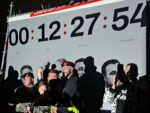
“Every war being fought in the world, every act of violence today, the violation of principles and laws today – all of these did not start yesterday, but on March 24, 1999. And if someone today asks why international law is being violated, the only correct answer is because of the permission that was given on March 24, 1999,” Vučić said on Tuesday in the square in front of the National Museum Gallery in Vranje, marking the 27th anniversary of NATO’s attacks on his country.
He added that even to the question of why today some countries are having their territories taken, their territorial integrity and sovereignty violated, the answer is the same – “because of the practice established on March 24, 1999.”
“Why is order imposed by force and bombs? Why are both officials and civilians killed, why is infrastructure destroyed, entire cities demolished, why does this ‘public execution’ of all humanity and empathy happen? There is only one answer: because of March 24, 1999,” Vučić stated.