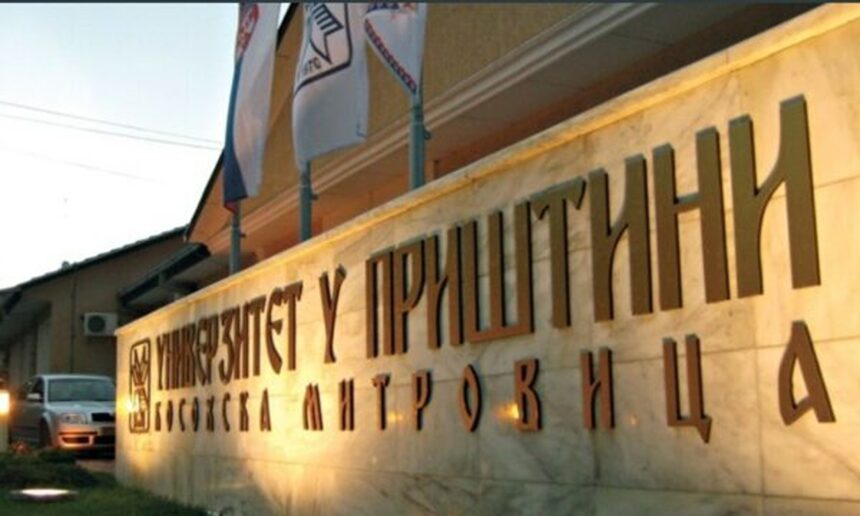
Growing interest in the verification of diplomas from the University of North Mitrovica comes at a time when Kosovo authorities are increasingly signaling the integration of the Serbian education and healthcare systems, while political representatives of Serbs send mixed messages on whether this process is necessary.
Igor Simić, a member of the Kosovo Assembly from the Serbian List, said he sees no “need or logic” for employees in Serbian-run education and health institutions in Kosovo to apply for diploma verification, as they are already employed within Serbia’s system.
However, verification of diplomas from the University of North Mitrovica—operating under Serbia’s system—is required to apply for jobs, obtain professional licenses, or take professional exams in Kosovo’s public institutions.
“I don’t see a reason for people to ask about this unless they intend to leave their current jobs and join another system,” Simić said, adding that he himself has not verified his diploma.
Meanwhile, education and healthcare sectors in Serb-majority areas of Kosovo continue to operate within Serbia’s system, while other Serbia-funded institutions have largely been closed by Kosovo authorities in the past two years as illegal parallel structures.
Kosovo officials have repeatedly stressed that the “dual system” in education and healthcare is unsustainable and that integration into a single system is necessary.
Nenad Rašić, Kosovo’s Minister for Communities and Returns, told Radio Free Europe that diploma verification is essential for Serbs to exercise their rights within Kosovo’s institutions.
“If you analyze Kosovo’s laws and Constitution, there is no room for employment with diplomas issued by Serbian institutions. An official cannot accept a diploma from North Mitrovica that states ‘Republic of Serbia’,” Rašić explained, emphasizing that the issue is technical rather than political.
Last week, the Kosovo government extended the mandate of the commission responsible for verifying diplomas issued by the University of North Mitrovica. This process has been in place since 2015.
Verification “just in case”
Marija, from Gračanica, verified her diploma in 2019 even though she did not need it for her job.
“I thought I should take the opportunity… now we’ve reached a situation where this process is becoming necessary,” she said.
She added that many people around her are now “massively” applying for verification, anticipating they will need it soon to secure employment rights in Kosovo.
Vesna, from northern Kosovo, who hopes to work in healthcare, has not yet verified her diploma but plans to do so.
“You never know when you might need it,” she said, noting that increasing discussions about integration pushed her to act.
Albin Kurti reiterated on March 14 that Kosovo will continue working toward integrating Serbian-run education and healthcare systems.
On the same day, Kosovo announced temporary 12-month residence permits for Serbs working in these sectors without Kosovo documents.
However, Simić claimed these measures were the result of “strong diplomacy” and insisted institutions would continue functioning within Serbia’s system.
The European Union stated that integration should be done in consultation with the Serb community and in line with dialogue agreements, coordinated with EU envoy Peter Sørensen.
Rising demand for diploma verification
Rašić said demand has surged sharply in 2026:
- Around 50–60 requests per month in 2025
- About 100 per week in January
- Over 200 per week in February
- Over 300 per week in March
More than 700 applications were pending as of last week, showing growing awareness among citizens of the importance of diploma recognition.
Diplomas within the Kosovo–Serbia dialogue
In 2011, Kosovo and Serbia reached an agreement on mutual recognition of university diplomas under the EU-facilitated dialogue. Additional conclusions were agreed in 2016, and the issue is also part of the 2023 normalization framework.
Both sides also committed to diploma recognition under the Washington Agreement signed at the White House in 2020.
However, Serbia continues to refuse recognition of diplomas from the University of Prishtina—primarily held by Albanians in the Presheva Valley—highlighting a stark contradiction in how diploma recognition is applied.