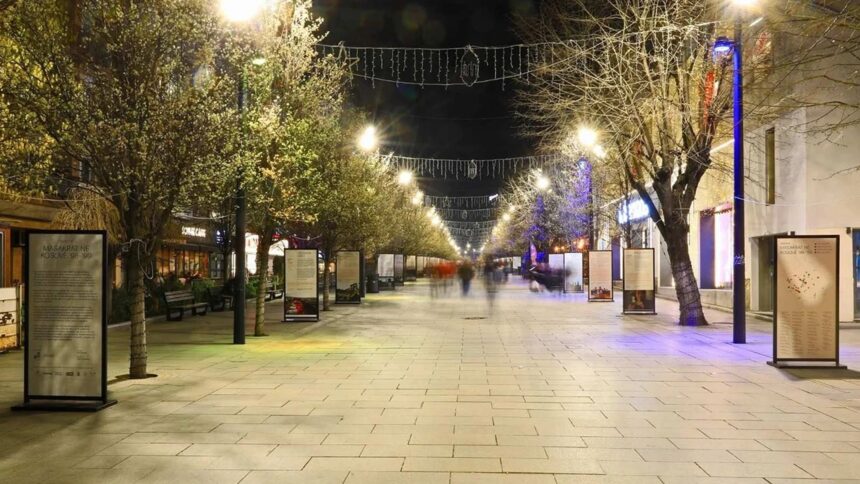
In the heart of Pristina, where the anniversary of the NATO bombing of Yugoslavia should have served as a moment of remembrance and respect for war victims, an exhibition was set up that, instead of preserving historical truth, distorted it.
According to its displays, many civilians killed in some of the most severe massacres in Kosovo were presented as armed individuals, sparking widespread reactions.
One of the first to respond was former MP Enver Dugolli, who stated on Facebook that the data presented about the massacre were entirely inaccurate. As a survivor, he rejected claims that some victims were armed, insisting that all were unarmed and defenseless.
Another survivor, Sadik Zeqiri, described the exhibition as shameful and a distortion of the truth. He emphasized that in the Dubrava Prison massacre, there were no armed prisoners, and that 116 Albanian prisoners were killed, one remains missing, and over 400 were injured.
Nait Hasani, an MP from the Democratic Party of Kosovo and also a survivor of the Dubrava massacre, went further, calling the exhibition a “monstrous crime” and criticizing the Assembly of Kosovo for financially supporting it. He called for legal action against those responsible.
Institutional reactions followed. Minister Andin Hoti described the exhibition as “unacceptable” and a direct violation of historical truth. He also pointed to inaccuracies regarding other massacres, including the Krushë e Madhe massacre, rejecting claims that women and children had been spared.
The Assembly of Kosovo acknowledged providing financial support for the exhibition but stated that the content and viewpoints presented remain the responsibility of its authors and organizers, citing principles of artistic freedom and authorship.
Following the backlash, Përparim Rama announced the immediate suspension of the exhibition permit, stating that the dignity of citizens and the collective memory of Kosovo must not be violated.
The exhibition is based on the book “Massacres in Kosovo 1998–1999” by Shkelzen Gashi, which draws on reports from international human rights organizations such as Amnesty International, Human Rights Watch, Organization for Security and Co-operation in Europe, and others.