NATO has firmly pushed back against Russia’s claims that the West is militarizing the Western Balkans, stressing instead that its presence in the region is aimed at safeguarding stability—not provoking conflict.
Together with the European Union, NATO dismissed Moscow’s accusations as unfounded, while warning of growing security concerns across the region. These include rising secessionist rhetoric in Bosnia and Herzegovina, continued tensions between Kosovo and Serbia, and a broader slowdown in normalization efforts.
“Authoritarian actors like Russia seek to exploit internal divisions and undermine democratic systems,” a NATO official told Radio Free Europe/Radio Liberty, pointing to disinformation, intimidation, and cyber threats as key tools of influence.
The dispute comes after statements made at a meeting of the Organization for Security and Co-operation in Europe in Vienna, where Russian representative Iulia Zhdanova accused NATO of destabilizing the region and violating the Dayton Peace Agreement.
Western officials rejected these claims, emphasizing that the long-standing arms control framework in the region has, in fact, strengthened stability over the past three decades.
Russia also criticized the role of international actors in Bosnia and Herzegovina, including High Representative Christian Schmidt, while calling for the closure of the Office of the High Representative.
Security analyst Gjuro Kozar countered that it is Russian-backed political forces—particularly those linked to Republika Srpska leader Milorad Dodik—that are fueling instability and undermining the state.
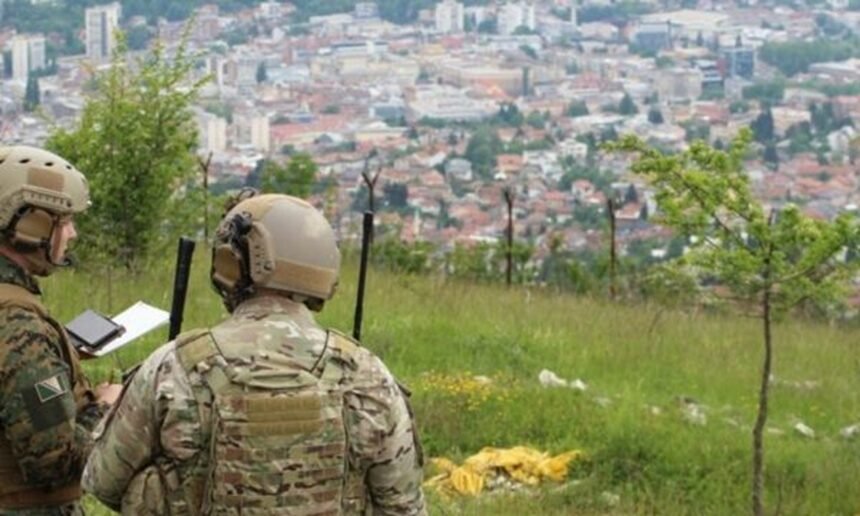
Moscow further objected to the reinforcement of EUFOR, but NATO reiterated that its support for EUFOR is essential to maintaining Bosnia’s sovereignty and territorial integrity.
Meanwhile, NATO underscored that the Western Balkans remain a strategic priority, making clear it will not allow any security vacuum to emerge in the region.
The alliance also highlighted the continued role of KFOR in Kosovo—its longest-running mission—which currently includes around 4,600 troops tasked with ensuring a safe and secure environment for all communities.
Despite Moscow’s claims that NATO is preparing the region for confrontation, the alliance insists its engagement is rooted in cooperation, reform, and long-term stability.
A recent U.S. intelligence assessment echoed these concerns, warning that Russia continues to fuel tensions in the Western Balkans, particularly between Serbia and Kosovo, while supporting separatist tendencies in Bosnia and Herzegovina.