The European Union is facing growing internal tensions as the repeated use of veto power by member states—most notably Hungary—raises concerns about political paralysis and the bloc’s ability to act decisively in times of crisis.
Budapest’s latest opposition to a €90 billion package for Ukraine marks one of 48 instances where EU Council decisions have been blocked, highlighting the increasing strain caused by the requirement for unanimity.
Under current rules, a single member state can halt decisions in key areas such as foreign policy, enlargement, and security—effectively freezing the entire decision-making process. While originally designed to protect national sovereignty, the veto is now increasingly viewed as a strategic tool to extract political concessions.
Experts warn that this trend risks undermining the credibility and effectiveness of the European Union on the global stage. “Unanimity can seriously block decision-making at a time when unity is essential,” said Patrick Müller, a professor of European Studies.
Since 2022, debates over reforming the veto system have intensified, particularly after repeated Hungarian blockages of sanctions and financial aid related to Russia’s war in Ukraine.
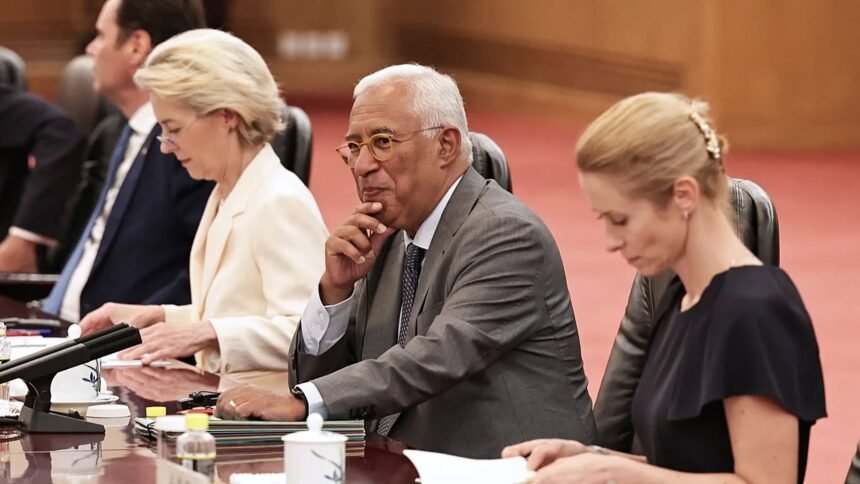
European Council President António Costa addressed the issue directly, stating: “No one can blackmail the European institutions,” following Hungary’s latest veto during a March summit.
Analysts argue that vetoes are increasingly used not only to defend national interests but also as leverage in unrelated disputes—such as frozen EU funds or rule-of-law disagreements—despite governments publicly denying such links.
According to Thu Nguyen, acting co-director of the Jacques Delors Centre in Berlin, veto threats are often timed with domestic political pressures, serving as signals to national electorates that governments are “standing up to Brussels.”
Despite its limitations, the EU still has tools to counter abuse of veto power. These include political isolation, informal negotiations outside formal frameworks, financial pressure through conditional funding, and, in extreme cases, the activation of Article 7—which can suspend a member state’s voting rights for breaching fundamental EU values.
However, these measures are politically sensitive and difficult to implement, as they themselves often require broad consensus.
Efforts to expand qualified majority voting—championed by Emmanuel Macron—face significant resistance, as they would reduce national control over critical decisions and require treaty reforms.
Ultimately, the EU remains caught in what many describe as a “veto trap”: unanimity can only be reformed through unanimity itself.
While most member states acknowledge the need for change, recent vetoes—including Poland’s opposition to a €44 billion defense modernization loan—demonstrate that national interests and sovereignty concerns continue to outweigh collective priorities.
For now, experts suggest that the most realistic path forward lies in restraint—using veto power only in exceptional cases directly tied to vital national interests, rather than as a routine political bargaining tool.