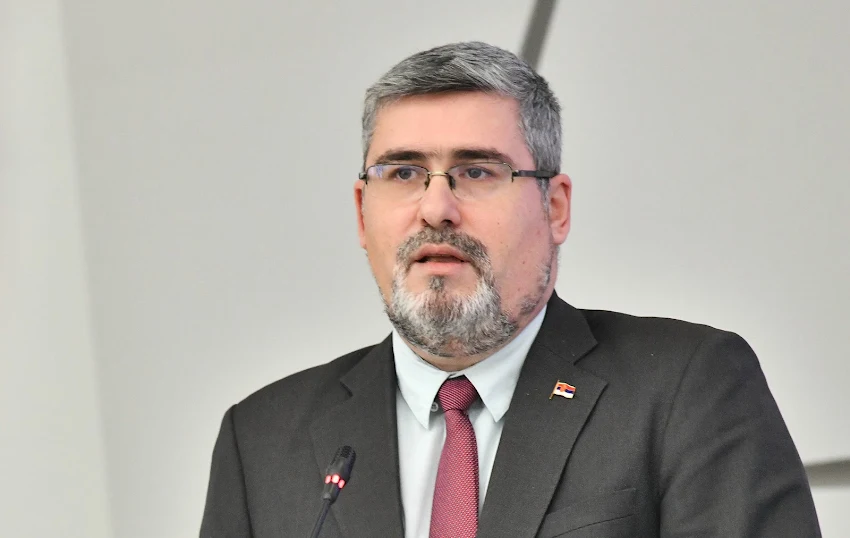
Branko Miljuš, a Member of Parliament from the Freedom and Justice Party (SSP), issued a sharp critique today against Serbia’s Minister for European Integration, Nemanja Starović. Miljuš asserted that Starović’s “anti-European views” have made him an unwelcome interlocutor in Brussels and are actively stalling Serbia’s progress toward EU membership.
Allegations of Ineffectiveness and “Informer” Diplomacy
In a written statement, Miljuš highlighted that during Starović’s tenure—which began in April 2025—Serbia has failed to open any new clusters or chapters in the negotiation process.
- Media Presence vs. Office Hours: Miljuš accused the Minister of spending more time in the studios of Informer and consulting with the Center for Social Stability—which he described as “pivots of anti-European propaganda”—than in his own ministry office.
- Diplomatic Isolation: The SSP official claimed that European officials are unwilling to engage with Starović due to his rhetoric, which Miljuš argues is incompatible with the mandate of European integration.
Shift in Authority: The Operational Team
The criticism comes at a time of shifting dynamics within the Serbian government’s integration apparatus. In late January 2026, President Aleksandar Vučić initiated the formation of a high-level Operational Team for the EU Accession Process.
- Danijel Apostolović: The team is led by Serbia’s Ambassador to the EU, Danijel Apostolović, who also serves as the Chief Negotiator.
- SSP Recommendation: Miljuš argued that Apostolović should effectively take over the responsibilities of the integration process, as the current ministerial leadership is seen as a barrier rather than a bridge to the EU.
The Status of Cluster 3
The primary frustration for the opposition remains the continued blockage of Cluster 3 (Competitiveness and Inclusive Growth). Despite being technically ready for years, Cluster 3 was once again passed over in late 2025 and remains stalled in the first half of 2026.
While the government maintains that the delay is purely political, the SSP frames it as a failure of leadership and a lack of genuine commitment to the rule of law and media freedom. Ambassador Apostolović recently stated that the goal remains to align Serbian legislation with the EU by the end of 2026, though he admitted that opening Cluster 3 remains a “political decision” by the member states.
Starović’s Response
Minister Starović has frequently countered such criticisms by accusing the “pro-European opposition” of being servile to foreign interests and failing to build a broad social consensus. Just yesterday, Starović dismissed an opposition-led EU support march as the “ideological hobby of the self-proclaimed Belgrade elite.”
The escalating rhetoric suggests that the European integration path will remain a central—and highly polarized—battleground in Serbian domestic politics throughout the 2026 election cycle.