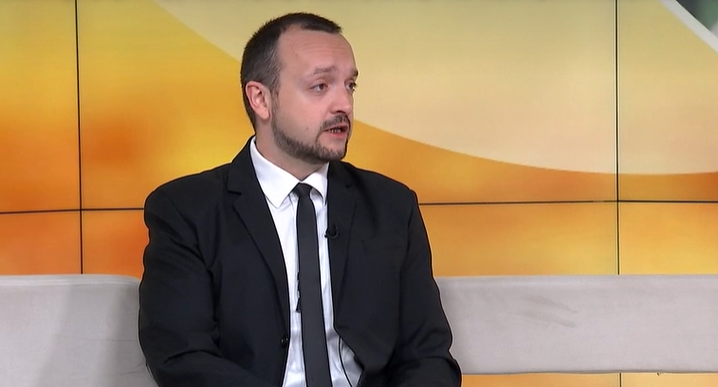
One year after student movements first demanded extraordinary parliamentary elections, the political landscape in Serbia has shifted fundamentally, according to political scientist Boban Stojanović. In an interview with N1, Stojanović argued that President Aleksandar Vučić no longer has a “safe date” for elections and that the government’s traditional strategy of solving crises through predictable electoral victories has reached its limit.
“The option in which Vučić calls an election and wins no longer exists,” Stojanović told N1. “The fact that these elections haven’t been called yet to resolve the political crisis shows that the crisis is no longer solvable that way; it has only deepened.”
The “Referendum” Atmosphere
According to Stojanović, the Serbian electorate has entered a “referendum-like” phase, characterized by a sharp binary choice between the ruling Serbian Progressive Party (SNS) and the rising student-led opposition. He noted that the high level of political mobilization seen during the March 29 local elections—where citizens not only participated in record numbers but also actively donated to student organizations—is unprecedented.
“The opposition side was mobilized and organized,” Stojanović remarked. “The SNS, even with all its resources, cannot organize this level of participation in such a short time. The students can mobilize a massive number of people with a single call.”
A Strategic Stalemate
Stojanović analyzed the recent speculation regarding summer elections as a government tactic to confuse voters and sow discord within the opposition. However, he believes these efforts have failed to yield results.
“If it were possible for him [Vučić] to win, the elections would have been called already,” he assessed. He suggested that instead of looking for a date to win, the administration is now merely looking for a date where it will “lose by a smaller margin.”
The 2027 Presidential Succession Problem
Looking further ahead, Stojanović predicts that presidential elections will likely be held in their regular term in April 2027. This presents a unique challenge for the ruling party, as President Vučić is constitutionally barred from running for a third term.
Potential names for a successor have begun to circulate, including Vladan Petrov and Ivica Dačić. Stojanović noted that finding a successor who can replicate Vučić’s voter appeal is a significant hurdle for the SNS, especially as its voter base continues to “fray.”
Polling Discrepancies
Addressing recent polls that place the SNS at 46.4% and the student list at 28.7%, Stojanović cautioned against taking these figures at face value. He alleged that certain polling organizations historically inflate the government’s rating by as much as 9% to discourage opposition voters.
“It is clear that there are two dominant actors,” he concluded. “Voters are now rationalizing their decisions—they don’t want to waste their votes, and the momentum is shifting toward those who represent a new hope for the future.”