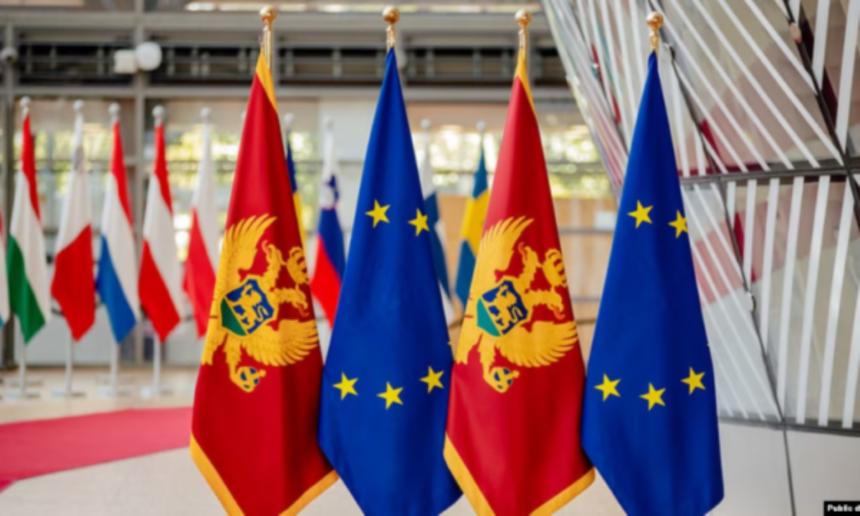
The European Parliament’s Committee on Foreign Affairs (AFET) has adopted the annual report on Montenegro, officially designating the country as the most advanced candidate in the European Union integration process.
The report, authored by MEP Marjan Šarec, acknowledges Montenegro’s significant progress but warns that the coming year will be “highly challenging,” requiring political maturity to transform technical readiness into full membership.
A Call for Judicial Integrity and Reform
While celebrating Montenegro’s status as a frontrunner, the European Parliament emphasized that the final stretch of negotiations depends heavily on the rule of law. The report calls for:
- Judicial Independence: Strengthening the efficiency and autonomy of the justice system.
- Anti-Corruption Efforts: Achieving sustainable results in the fight against high-level corruption and organized crime.
- Legal Backlog: Reducing the significant number of pending court cases.
- Visa Policy: Ensuring full harmonization with the EU’s visa requirements.
“Time is limited, and there is still work to be done,” Šarec stated following the vote. “This report is a call to all stakeholders to show wisdom and responsibility, ensuring that minor disputes do not overshadow or derail broader strategic objectives.”
Political Stability over Partisanship
The document highlights a recurring concern in Brussels: internal political tensions. The European Parliament urged Montenegro’s government and opposition to maintain a national consensus on EU integration, placing it above party interests.
The report specifically asks that “identity issues” not be allowed to distract from the European process. To date, Montenegro has provisionally closed 14 of its 33 negotiating chapters. The nation’s ambitious goal is to close all remaining chapters by the end of this year, clearing a path for potential accession by the end of 2028.
Countering Foreign Influence
The report also expresses concern regarding foreign interference, disinformation, and hybrid threats within the country. It calls on Montenegro to strengthen the resilience of its institutions against such external pressures.
On a positive note, the Committee praised Montenegro’s consistent and full alignment with the EU’s Common Foreign and Security Policy, reaffirming the country’s reliability as a strategic partner.
Next Steps
Following the approval by the AFET Committee, the report is scheduled for a vote in the European Parliament’s plenary session in June, where it will officially be adopted as a resolution. This comes as the EU recently established a working group to begin drafting the Accession Agreement for Montenegro—a major milestone on the road to the 2028 target.