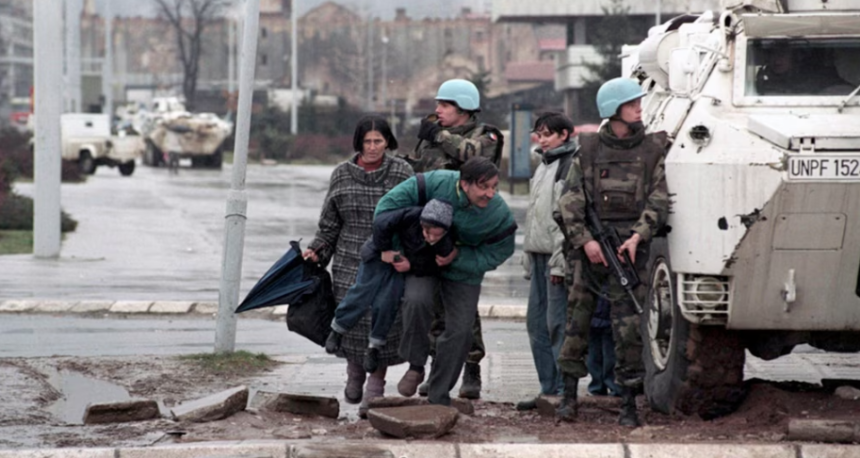
On May 5, 2026, the Sarajevo Canton observed a solemn Day of Mourning to commemorate the 1,601 children who lost their lives during the 1,425-day siege of the Bosnian capital in the 1990s.
Flags were flown at half-mast across all government buildings, public institutions, and schools to honor the youngest victims of what remains the longest siege of a capital city in modern warfare.
A Legacy of Loss: 1,601 Young Lives
Official data confirms that between 1992 and 1995, the relentless targeting of the city by the Army of Republika Srpska claimed the lives of 1,601 children. International and domestic court findings indicate that at least 53 of these children were deliberately targeted by snipers, while over 14,000 others were wounded during the nearly four-year blockade.
Despite the scale of these atrocities, the President of the Association of Parents of Children Killed during the Siege, Fikret Grabovica, has repeatedly noted that no individual has been specifically held accountable or prosecuted for the targeted killing of children during this period.
“The White Room” and Institutional Memory
The Sarajevo Cantonal Government established May 5 as the official Day of Remembrance in 2019. To ensure these lives are never forgotten, the Historical Museum of Bosnia and Herzegovina launched a permanent memorial project in February 2020.
Known as the “White Room” (Dhoma e Bardhë), the installation features personal belongings—toys, clothes, and school items—collected from the families of the victims. The exhibit serves as a haunting physical testament to the childhoods that were abruptly cut short by war.
Legal Accountability for the Siege
The International Criminal Tribunal for the former Yugoslavia (ICTY) has delivered several life sentences for the terrorization of Sarajevo’s civilian population:
- Stanislav Galić: Sentenced to life imprisonment for his role as commander of the Sarajevo-Romanija Corps.
- Dragomir Milošević: Sentenced to 29 years in prison for succeeding Galić and continuing the campaign of terror.
- Radovan Karadžić & Ratko Mladić: Both received life sentences for crimes that included the systematic sniping and shelling of Sarajevo.
- Biljana Plavšić: Pleaded guilty to crimes in Sarajevo and was sentenced to 11 years.
While the primary architects of the siege were convicted, local survivors and activists continue to call for further investigations into the direct perpetrators who pulled the triggers against the city’s children.