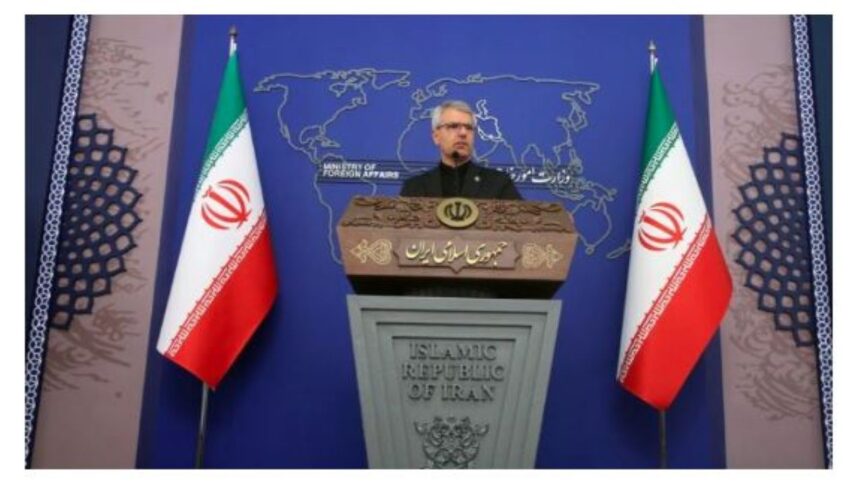
The Iranian government has officially confirmed it is reviewing a response from the United States regarding a 14-point peace proposal aimed at concluding the ongoing military conflict. Foreign Ministry spokesperson Esmaeil Baqaei stated on Monday that Tehran will convey its final position through Pakistani mediators once a thorough assessment is complete.
The current conflict, which began with a massive joint U.S.-Israeli strike on February 28, 2026, has seen months of intense volatility, including naval blockades and retaliatory strikes across the Persian Gulf.
Current Status of Negotiations
According to Baqaei, the Iranian leadership is carefully weighing the American counter-proposal, though he cautioned that progress is hampered by what he described as Washington’s “excessive and unreasonable demands.”
- Mediation Channel: Pakistan remains the primary intermediary. Direct talks previously took place in Islamabad on April 11, following a temporary ceasefire.
- Focus on Ending the War: Baqaei dismissed rumors that the current talks involve the nuclear program. “At this stage, we are not talking about anything other than the complete end of the war,” he clarified, calling media reports on nuclear enrichment “purely speculative.”
- The 14-Point Plan: Iran’s proposal reportedly includes demands for the lifting of the naval blockade, the withdrawal of foreign forces, and financial compensation for damages incurred since February.
Conflict Timeline: From “Epic Fury” to Blockade
The war has fundamentally reshaped regional security over the past two months:
| Date | Event | Impact |
| Feb 28, 2026 | Operation Epic Fury | Joint U.S.-Israeli strikes target Iranian leadership and military sites. |
| April 8, 2026 | Initial Ceasefire | Pakistan mediates a two-week pause; the Strait of Hormuz partially re-opens. |
| April 13, 2026 | U.S. Naval Blockade | U.S. enforces a blockade on Iranian maritime traffic following a breakdown in talks. |
| May 4, 2026 | Review of U.S. Terms | Iran confirms receipt of the U.S. response to its 14-point peace plan. |
Regional Impact
The conflict has caused significant disruption to global energy markets. Since the U.S. imposed its naval blockade on April 13, shipping traffic in the Strait of Hormuz has been severely restricted. Iran has retaliated by periodically closing the waterway, leading to a “dual blockade” situation where both sides are attempting to throttle the other’s maritime capabilities.
While President Donald Trump recently extended the temporary ceasefire at Pakistan’s request, he noted on social media that he remains skeptical of the Iranian terms, suggesting that Tehran has “not yet paid a big enough price.”