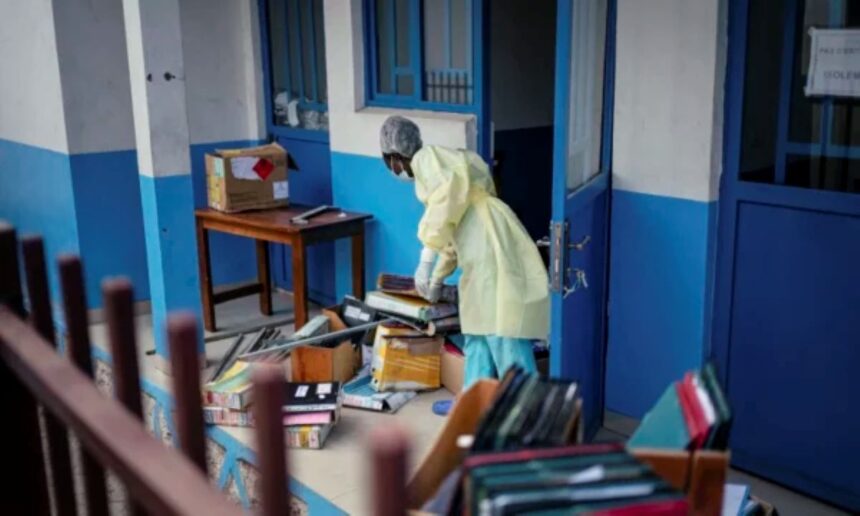
The World Health Organization (WHO) has officially declared the rapidly escalating Ebola outbreak in the Democratic Republic of the Congo (DRC) and Uganda a Public Health Emergency of International Concern (PHEIC). This represents the highest level of global alarm the United Nations health agency can issue short of declaring a full pandemic.
The outbreak, primarily centered in the northeastern Ituri Province of the DRC, has seen over 390 suspected cases and at least 100 deaths. The virus has now breached international borders, with Uganda confirming its first two cases, including one death involving an elderly man who traveled from the DRC.
As a result, neighboring nations, including Rwanda and South Sudan, have been placed on “high alert” to mitigate the risk of further cross-border transmission.
The Bundibugyo Strain: A Critical Treatment Vacuum
Unlike the more commonly detected Zaire ebolavirus strain that fueled previous major epidemics in the region, genetic sequencing has confirmed that this latest wave is caused by the rarer Bundibugyo ebolavirus variant.
This biological distinction presents a significant hurdle for global health responders. While medical advancements over the past decade produced highly effective vaccines (such as Ervebo) and monoclonal antibody treatments for the Zaire strain, there are currently no approved or licensed vaccines or specific therapeutics for the Bundibugyo virus. Patient care remains restricted to aggressive supportive therapy and symptom management.
Amplification Risks Amid Pre-existing Humanitarian Crisis
The WHO has warned that the true scope of the outbreak could be “significantly larger” than current laboratory data suggests. Epidemiologists point out that the figures are likely underreported due to localized transmission chains that have yet to be mapped out.
The response is further complicated by a compounding humanitarian crisis in eastern DRC. Ituri Province has long suffered from heavy civil insecurity, mass population displacement, and targeted attacks on healthcare workers and medical facilities by various armed actors.
A confirmed case was recently identified in Goma, North Kivu, directly linked to the Ituri epicenter. The detection prompted de facto provincial authorities to close the strategic border crossing between Goma and Rwanda, a development international aid groups warn will severely obstruct humanitarian access and cross-border logistical corridors.
Community Safeguards and Safe Burials
Health officials are focusing heavily on community engagement, contact tracing, and risk communication. The virus spreads via direct contact with the bodily fluids of infected or deceased individuals.
Because traditional funeral rites and community mourning practices involve close physical contact with the deceased, public health agencies are strictly urging residents in the affected health zones—including Bunia, Rwampara, and Mongbwalu—to allow specialized teams to handle safe and dignified burials (SDB). Strict hand hygiene, avoiding informal healthcare settings, and immediate isolation of symptomatic individuals remain the primary defense mechanisms against further regional spread.