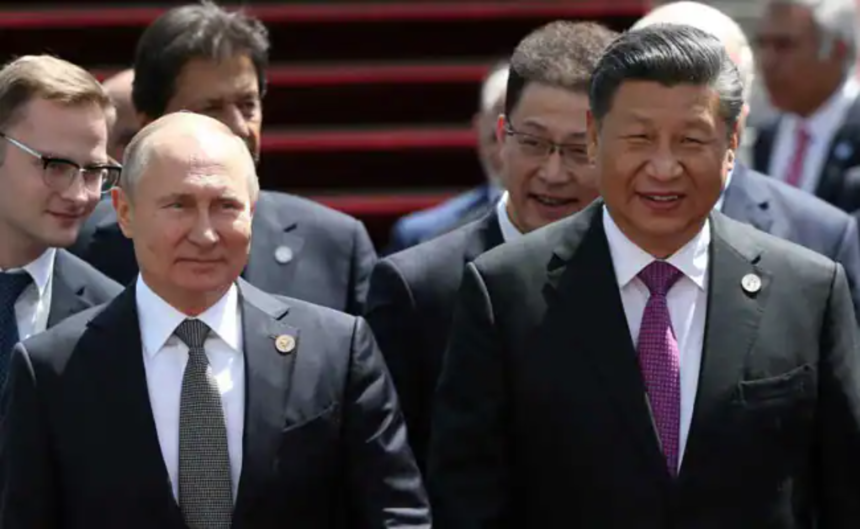
In a highly scrutinized sequence of nuclear-power diplomacy, Russian President Vladimir Putin concluded a two-day state visit to Beijing on May 19–20, leaving without the strategic economic breakthroughs the Kremlin aggressively sought.
Putin’s arrival in the Chinese capital came just days after U.S. President Donald Trump concluded his own high-stakes bilateral talks with Chinese Leader Xi Jinping.
While Russian state media anticipated that the visit would finally cement the long-delayed Power of Siberia 2 gas pipeline deal, the summit yielded only a generic joint declaration pledging to “continue deepening comprehensive relations.” Foreign policy experts note that the sparse diplomatic output underscores a widening structural imbalance between Moscow and Beijing.
   [THE BEIJING SUMMIT PROFILE: MAY 19-20, 2026]
   • Russian Objective:  Secure signatures for the Power of Siberia 2 pipeline.
   • Chinese Stance:     Maintain the status quo; demand steeper discount on natural gas.
   • Geopolitical Context: Followed Trump's rescheduled Beijing visit (delayed by the Iran War).
   • Domestic Backdrop:  Putin's approval ratings hit post-Feb 2022 lows; skeletal Victory Day parade.
Squeezed by Asymmetry and the Iranian Oil Boom
The geopolitical backdrop of Putin’s trip was notably grim for Moscow. Driven by fears of targeted Ukrainian long-range drone strikes, the Kremlin was forced to hold a drastically scaled-down Victory Day parade on May 9. Subsequent massive missile barrages exchanged between Kyiv and Moscow culminated in Ukraine inflicting the heaviest retaliatory strikes on Russian soil since the 2022 invasion. Concurrently, state-controlled pollsters revealed that Putin’s domestic approval ratings have plummeted to their lowest levels since the war began.
Faced with these domestic vulnerabilities, Putin sought to leverage the global energy crisis—triggered by Donald Trump’s ongoing war in Iran—to strengthen his hand with Beijing. While skyrocketing global oil prices have temporarily boosted Russia’s export revenues, international analysts note it has not altered the structural dependency binding Moscow to China.
                    [THE NATURAL GAS DEADLOCK]
                                │
         Russia Needs to Divert Stranded European Gas Volumes
                                │
         ┌──────────────────────┴──────────────────────┐
         ▼                                             ▼
   [THE POWER OF SIBERIA 2]                      [THE CHINESE BARGAIN]
   Moscow pushes to construct an additional      Beijing refuses to finance construction
   pipeline to absorb over 38B cubic meters      and demands cut-rate, sub-market pricing
   of natural gas annually.                      knowing Moscow lacks alternative buyers.
“The Chinese want exceptionally good prices for Russian gas, and the Russians are hesitant to accept that,” stated Timothy Ash, a senior fellow with the Russia and Eurasia Program at Chatham House. Ash noted that disagreements persist over who will cover the massive infrastructural costs of the new pipeline, adding that China feels no urgency to advance talks while it enjoys an advantageous position.
The Trump-Xi Shadow and “Regret” Rumors
The timing of the back-to-back superpower visits in Beijing raised eyebrows across global diplomatic corps. However, Temur Umarov of the Carnegie Russia Eurasia Center clarified that Putin’s visit had been scheduled months in advance. Trump’s visit occurred just prior only because the American president had been forced to postpone an earlier itinerary due to the outbreak of the war in Iran.
Immediately prior to the Putin-Xi summit, international media outlets leaked an unverified transcript alleging that President Xi had privately told Donald Trump that Putin would ultimately “regret” his full-scale invasion of Ukraine.
            [BEIJING'S CALCULATED NEUTRALITY]
            • The Leaked Transcript:  Claims Xi told Trump that Putin "regrets" Ukraine.
            • Official Response:     Vehemently denied by both the White House and Beijing.
            • Summit Communiqué:     Zero mention of Ukraine; heavy focus on stopping the Iran War.
Though both Washington and Beijing swiftly issued official denials of the leaked exchange, the formal joint statements released by Xi and Putin completely omitted any reference to the war in Ukraine. Instead, Xi used the podium to declare it “imperative” to halt hostilities in the Middle East—a conflict that directly threatens Chinese maritime trade routes and industrial stability.
Why China Prefers a Protracted Conflict
Geopolitical strategists point out that Beijing has little incentive to exert its leverage over Vladimir Putin to bring an end to the war in Europe.
According to Jiangli Yang, a political scientist affiliated with Harvard University, the current layout serves China’s long-term economic and industrial interests. The severe Western sanctions walling off Russia from G7 markets leave Moscow with no choice but to liquidate its natural resources to China at heavily discounted rates.
Furthermore, Chinese state-owned enterprises are already positioning themselves to dominate the highly lucrative post-war reconstruction phase in both Ukraine and a economically depleted Russian Federation. By maintaining a calculated neutrality, Xi Jinping has successfully isolated China from Western secondary sanctions while ensuring that a weakened, isolated Kremlin remains entirely dependent on Beijing’s financial and political lifeline.